A street interview series from Medyascope leading up to the upcoming presidential and parliamentary elections examines voter preferences in all 81 provinces of Turkey. In several central Anatolian cities known as strongholds of support from President Recep Tayyip Erdoğan and his Justice and Development Party (AKP), Medyascope correspondents took to the streets to speak with voters regarding the upcoming polls, scheduled to take place on Sunday, May 14. The reporting indicates that while support for Erdoğan remains intact in certain cities, his backing may have waned in others, with some voters expressing disillusionment following 20-plus years of AKP rule.
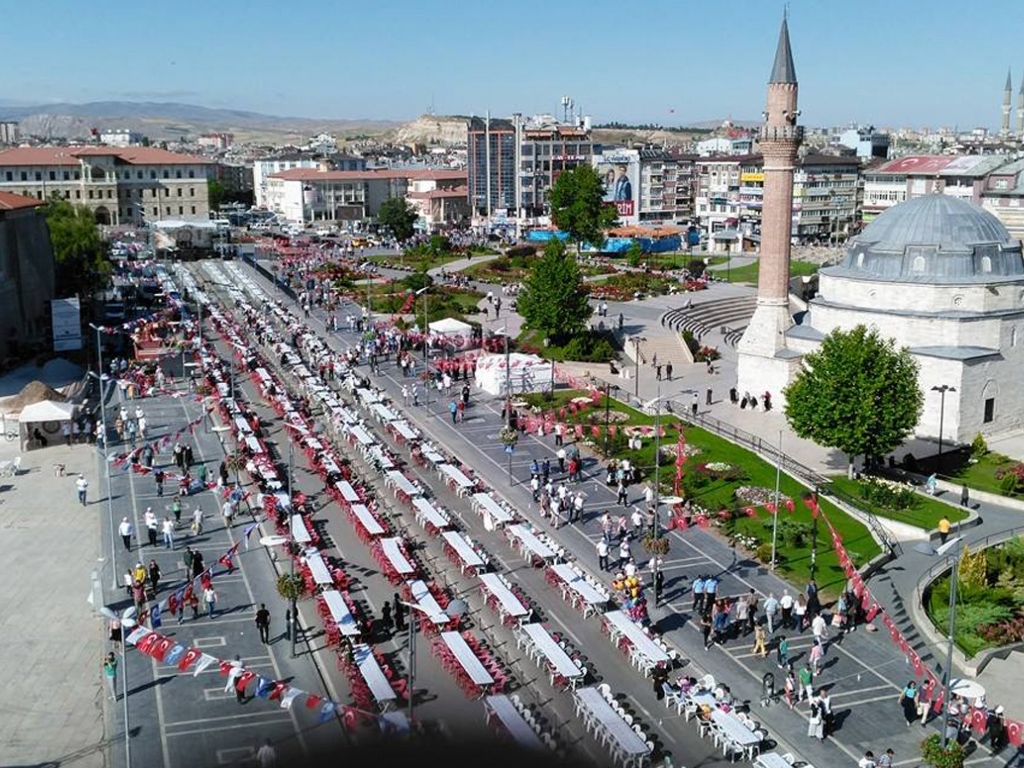
Sivas
Located hundreds of kilometers east of the Turkish capital of Ankara, Sivas occupies a central position on the Anatolian landmass. The city is known for its cold winters as well as the city in which Turkish founding father Mustafa Kemal Atatürk founded the country’s first congress during Turkey’s War of Independence. A high-speed rail line connecting Sivas to Ankara opened just weeks ago, in what was interpreted by many as a pre-election push for votes by the AKP. Previously more politically moderate, the city has become more conservative in recent decades, driven in part by a 1993 massacre in which some 37 minority Alevi intellectuals perished in a hotel fire set ablaze by Islamist extremists. Following the event, many Alevis from the area moved out of Sivas province to larger cities.
Sirar Doğan, a veteran journalist from Sivas, spoke to Medyascope and described the city’s primary problems as unemployment and the migration of Sivas natives to larger cities: “The outward migration that started in the 1940s continues. Eight out of every 10 people of Sivas origin live outside of Sivas. There are no public institutions left in Sivas…The number of employed workers has decreased drastically. A company that once employed 3000 people now employs only 300.”
On the city’s streets, some expressed support from President Erdoğan. At a taxi stop near the city center, several taxi drivers told Medyascope correspondents “AKP is number one in Sivas, there’s no other way,” “We have no problems in Sivas,” and “Please God, do not take Tayyip from us.”
Younger voters expressed varying views regarding the candidacy of Turkey’s long-tenured strongman. A 23 year old resident of Sivas preparing to cast his vote for the first time said he prefers Muharrem Ince, a breakaway third-party candidate who has enjoys sizeable support from Gen Z voters disillusioned with main opposition candidate Kemal Kılıçdaroğlu and his Republican People’s Party (CHP): “I’m studying at university and we have a bus problem. We have a water problem, the water is cut off frequently on campus…Most of my friends’ families are conservative, they will vote for AKP and Erdoğan. I see that some of my friends prefer Muharrem İnce, and I prefer Muharrem İnce.”
Another young voter, while acknowledging Sivas’ current situation is subpar, expressed that he would nevertheless be supporting President Erdoğan: “Everything is expensive. I just went out and couldn’t even buy a coat, it’s too expensive. We are sitting on the bench right now because we do not have money to go to the cafe. Young people suffer from this situation.” Sayingthere is no work to be found even for university graduates, the 20-year-old continued: “Even after university, there’s no work.” Saying he would be voting for the AKP despite the bleak situation in Sivas, he said: “Because there is no good option. In my eyes they are all bad. The AKP seems a better option to me and I’ve already been trusting them for many years. I have friends voting for Muharrem Ince but I’m standing by President Erdoğan.”
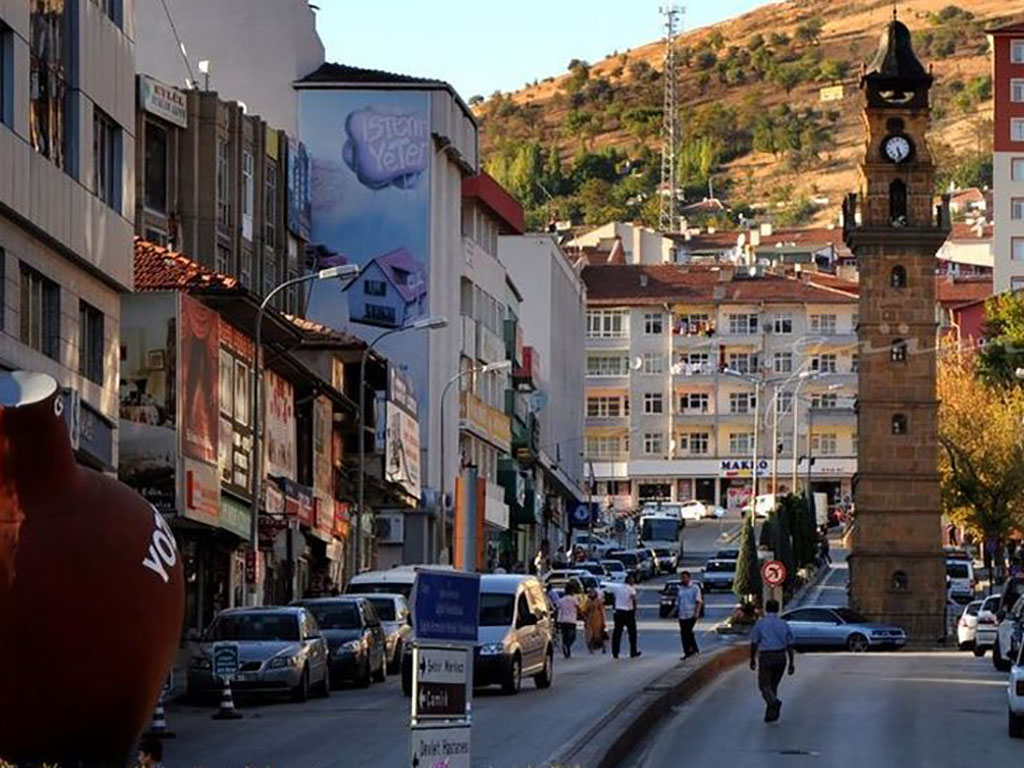
Yozgat
Yozgat is another central Anatolian city that shares much in common with Sivas. The city also experiences long, cold winters and has historically hosted a small Alevi community. However, much in the same way as Sivas, the city has seen major outward migration towards bigger cities in recent years. The city is also a known AKP stronghold, having voted 78% for President Erdoğan’s coalition in the 2018 election. Youth in the city center who spoke to Medyascope expressed their support for President Erdoğan while acknowledging the city’s bleak outlook for youth. “No one other than Recep Tayyip Erdoğan,” said one university-age resident when asked who he would support. One Azerbaijani student who said she’d come to Yozgat to study also expressed her support for Erdoğan, saying “He helped us a lot during the war [Nagorno Karabakh War in 2020] and we like those types of people. Yozgat is a nice place but it’s a hard city to be in as a student.” A friend of hers said he would be supporting Muharrem Ince, complaining of the high prices in the city and the lack of opportunities for young people.
The past 20 years have seen extreme out-migration from Yozgat to larger cities. Around one in three residents have left the province, resulting in a population shrinkage of over 30% compared to 2000.
While Yozgat is likely to remain an AKP stronghold during this election cycle, opposition CHP’s local branch representative said that local interest in Kemal Kılıçdaroğlu’s candidacy has been high. Speaking to Medyascope, local branch head Abdullah Yaşar expressed optimism about the results of the upcoming polls, saying “Yozgat has always voted for AKP 10-15 points above Turkey’s average, but it has never been rewarded for this support. There were periods when there were three ministers from Yozgat in the [presidential] cabinet, but they were of no use to the city. Otherwise, why would more than 200,000 people have migrated away over the past twenty years? The people of Yozgat are ready to say ‘stop’ and welcome Mr Kılıçdaroğlu as our republic’s 13th president.”
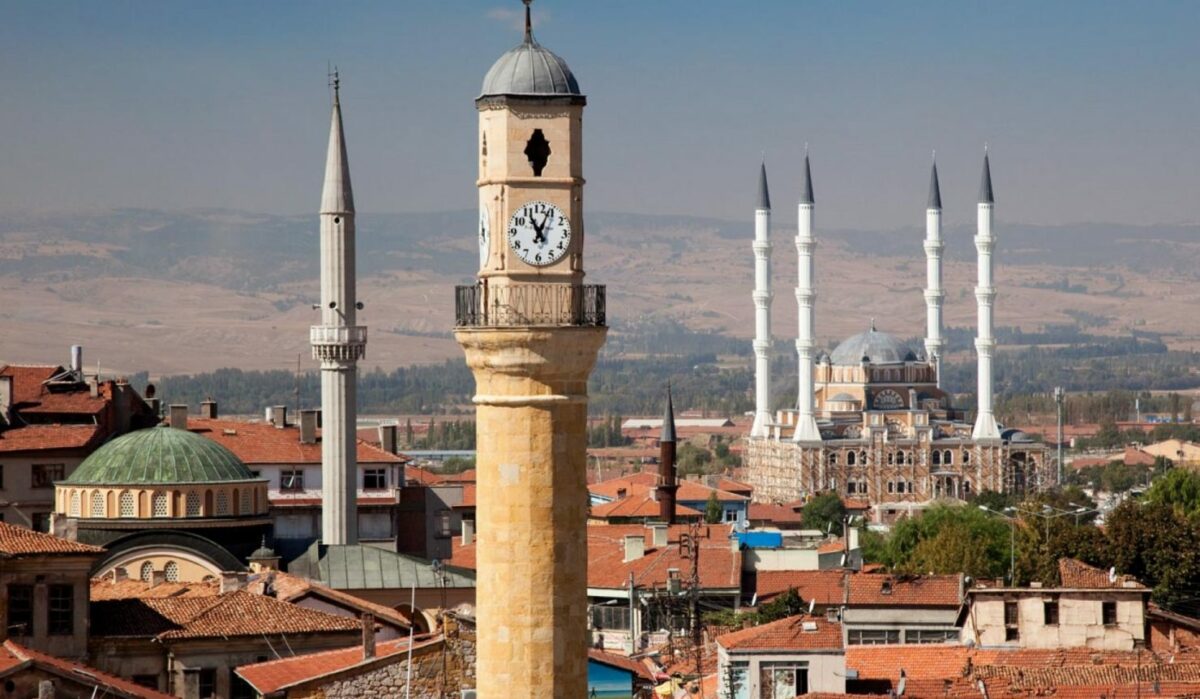
Çorum
While officially classified as part of Turkey’s Black Sea Region, the city of Çorum is culturally and geographically closer to central Anatolia in its climate, demographic make-up, and cultural identity. The city has also traditionally supported the AKP, voting for President Erdoğan with 66% of the vote during 2018’s presidential election over his CHP rival, significantly more than the 50% of the vote Erdoğan won country-wide. The city is known for the roasted chickpea snack called leblebi as well as ancient ruins dating to 1300 BCE.Similarly to Sivas, the city is also infamous for a massacre against Alevis that took place just months before Turkey’s military coup of 1980. The CHP’s local branch head described unemployment, housing prices, and depopulation as the biggest problems facing Çorum, echoing those in Yozgat and Sivas.
Despite these problems, several older voters at the town square described how they’d be voting for Erdoğan regardless, with one saying “The CHP is the enemy of the people.” Another retiree said “We get by very easily, don’t listen to those people who are complaining about their pensions.” Other retirees seemed less sure. One 69 year old described how he had resorted to selling simits because he couldn’t make ends meet with his retirement stipend.
Many youths also seemed dissatisfied with life in the central Anatolian city, with one saying “I’m thinking of voting for Muharrem Ince. I think he is the best choice for young voters.” Another said he’d be voting for Kılıçdaroğlu instead, saying “Ince has made a lot of promises, but I’m not sure if he’ll be able to keep them.” As was the case in Yozgat and Sivas, other youths in the town square indicated that they would be supporting President Erdoğan despite their dissatisfaction with life in Çorum.
While acknowledging that Çorum remains a conservative city, the CHP’s local branch head Ümit Er described how the party has made recent inroads, saying, “In some villages around here where the CHP could never even enter, we are now being invited by some locals to come and share a tea with them. In the past, the AKP used to win three out of four seats in Çorum [the city’s representation in the Turkish Parliament]. This year, I think they might only win two.”
Murat Günay, the head of the AKP’s local branch, described further investments in infrastructure as the keys to winning the votes of Çorum locals: “Airport and high speed train: if we are able to accomplish both of these, then that’s all we need.” Günay argued that both would serve to boost the city’s tourism potential and bring in economic growth.
Read Medyascope’s election outlook from Mersin, Adana, and Çanakkale and from several districts of Istanbul.
Written/translated for Medyascope by Leo Kendrick