The 2022 assassination of the Halil Falyalı in Turkish Republic of Northern Cyprus (TRNC) was more than just a pedestrian gangland hit; but the first domino to fall in a sprawling international saga. Falyalı, a tycoon who mysteriously rose from a casino security guard to underground kingpin allegedly controlling a vast illegal betting empire in Northern Cyprus, was gunned down in a professional hit. When his alleged money-man, Cemal Önal, was killed in a similar hit in the Netherlands last year, it became clear that this was no longer a local dispute. Müzeyyen Yüce has written a comprehensive series reporting on the illegal gambling world in Turkey.

In Turkey, the authorities are fighting a war of contradictions. On one side, the state is projecting a hardline stance: police raids are frequent, suspects are paraded through the courts, and judges are increasingly issuing sweeping asset seizure orders. Yet, on the other, there are growing fears that the very heart of the country’s financial system is being compromised.
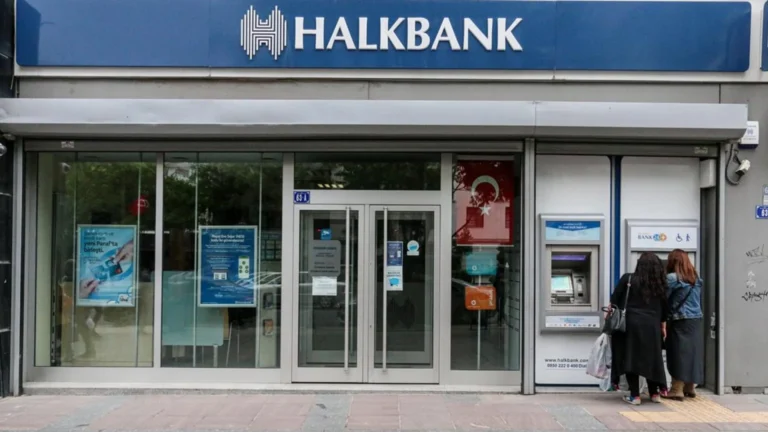
The controversy has been sharpened by the high-profile transfer of BankPozitif—a regulated Turkish lender—to Erkan Kork. At the time of the deal, Kork was already the subject of an investigation into money laundering and illegal betting. The acquisition has sparked a fierce debate in Ankara over how easily “black money” can be washed through official banking channels, effectively hiding in plain sight.
From steel safes to digital wallet
The shifting nature of this underworld was recently exposed by the case of Veysel Şahin, a figure alleged to have managed sprawling gambling rings through a network of global front companies. In a landmark move, authorities seized approximately €460m ($535 m) in crypto-assets linked to his operations.
It was a clear signal to the public: the modern criminal “vault” is no longer a physical safe bolted to a floor, but a series of encrypted digital wallets accessible from anywhere in the world.
A $50bn ‘shadow economy’
The scale of the crisis is staggering, even by international standards. While a 2023 United Nations report puts the global illegal betting market at an eye-watering $1.7 trillion, Turkey has become a disproportionate hotspot.
In 2021, the then-Interior Minister, Süleyman Soylu, estimated the country’s illegal gambling volume at $50bn. To put that in perspective, while MASAK (Turkey’s Financial Crimes Investigation Board) successfully blocked 644 million TL ($14m) in 2023, and seized a further 30 million TL ($686,000), these sums represent only a tiny fraction of the total trade.
Despite the constant cycle of raids, the changing names of front companies, and the daily shuttering of websites, the underlying system remains remarkably resilient. For every “fly” the state swats, the digital swamp remains undrained.
The ‘Financial Police’ and the 70% shadow market
At the heart of Turkey’s domestic crackdown is MASAK, the Financial Crimes Investigation Board. Functioning much like the UK’s National Crime Agency or the US’s FinCEN, MASAK is the state’s primary weapon against the laundering of criminal proceeds. On paper, the mechanism is clinical: banks and financial institutions flag suspicious movements, MASAK analysts vet them, and the findings are handed to prosecutors.
However, in the high-speed world of online gambling, the system is struggling to keep pace. The illicit billions rarely stay in one place long enough for a “freeze” order to take effect. Instead, networks use “rented” bank accounts—often belonging to students or low-income individuals—to move small, inconspicuous amounts. These are then rapidly funneled into virtual wallets, converted into cryptocurrency, and moved offshore before the 10-day reporting window even closes.
A market in the dark
The scale of this failure was laid bare by Akın Gürlek, a heavyweight in the Turkish judiciary. As the former Chief Public Prosecutor of Istanbul and now the country’s Justice Minister, Gürlek holds a bird’s-eye view of the crisis. In December, he dropped a bombshell, stating that only 30% of virtual betting in Turkey falls under the legal category. The remaining 70% belongs entirely to the black market.
Dr. Ramazan Başak, a former Vice President of MASAK, warns that the volume of this “shadow economy” has reached an untenable scale. Başak notes that while MASAK monitors 37 different categories of businesses—from banks to jewelry dealers—the sheer tide of suspicious activity reports is overwhelming.
“In 2021, MASAK received 515,000 suspicious activity reports,” Dr. Başak says. “A staggering 74% of those were linked to illegal betting.”
The statistical anomaly
Curiously, while the problem feels more pervasive on the streets, official figures suggest a shift. By 2024, although total suspicious reports rose to 559,000, the portion attributed specifically to illegal betting dropped from 74% to 24%.
Does this mean the authorities are winning? Not necessarily. According to the National Risk Assessment Report released in July 2025, illegal betting remains the second most significant crime in the country, eclipsed only by fraud.
“We would normally expect illegal betting to be in the top spot given its intensity,” Dr. Başak observes. “There is certainly a struggle taking place, but the reality is that policing measures alone can only achieve so much.” The implication is that while the state is catching more individual “flies,” the digital infrastructure allowing these empires to breathe remains largely intact.
Dead ends and ‘safe havens’: Why the money trail goes cold
The fight against Turkey’s illegal gambling billions is increasingly hitting a brick wall at the national border. According to Dr Ramazan Başak, while domestic policing has seen some success, the trail of illicit money often vanishes the moment it crosses into jurisdictions that refuse to cooperate with Ankara.
For investigators, this is a race against geography. Much of the money is funneled into a handful of regional neighbors—specifically Georgia, Southern Cyprus, Montenegro, and Armenia. In these countries, the online platforms that are strictly prohibited in Turkey often operate with legal licenses, creating a “grey zone” that protects the kingpins.
“International cooperation is no longer optional; it is vital,” Dr Başak explains. The complexity of modern money laundering means that a single sum can be bounced through five or six different countries in a matter of hours.
“You can track a transaction through half a dozen cooperative nations, but the moment it enters a country that won’t play ball, months or even years of investigative work can be wiped out in an instant,” he warns. “Once the money is in those jurisdictions, you lose all visibility. You can’t see how it’s being moved, who is withdrawing it, or where it will reappear next.”
This lack of transparency doesn’t just protect gamblers; Dr Başak notes it creates a vacuum where the financing of terrorism and broader organized crime can flourish unchecked, turning regional “safe havens” into a major hurdle for Turkish national security.
The ‘Incubator’: Is the State’s own system feeding the beast?
In a stinging critique of current policy, Dr Ramazan Başak suggests that Turkey’s legal betting market is not a shield against crime, but rather a “nursery” or “incubator” for it.
The paradox is stark: while physical casinos were banned in Turkey in 1997 to protect the public from “social decay,” technology has brought the casino back into the palm of every citizen’s hand. Today, slot-style games and sports betting are accessible via smartphones with virtually no physical or social barriers.
“There is no fundamental difference between legal and illegal betting,” Dr Başak argues. “In fact, the legal system is often more dangerous because it carries no social or legal stigma. People start there, develop the habit, and then migrate to the illegal shadow market in search of the higher odds and bigger payouts that licensed operators simply cannot match.”
Palliative care for a systemic crisis
The Turkish government’s primary strategy to fight the black market has been economic competition. At the start of 2024, the state slashed taxes on legal betting by half, hoping that better returns for players would lure them away from illicit sites.
The results, however, tell a different story. “The tax cut poured billions into the coffers of licensed companies, but the illegal market didn’t shrink—it grew,” says Dr Başak. He dismisses these measures as “palliative,” arguing that the state is treating the symptoms while ignoring the underlying infection.
The real issue, he suggests, is rooted in Turkey’s current socio-economic climate. “We are confusing our priorities. We need to ask why our society—and particularly our youth—is so desperate to gamble. What are the psychological and economic pressures driving this?”
For Dr Başak, simply moving a gambler from an illegal platform to a state-sanctioned one is a hollow victory. “People are just moving from one casino to another. This doesn’t prevent the destruction of families or lives. Until we address the root causes, we are merely swatting at flies while the swamp continues to expand.”
25 million players and a $70bn black hole
The sheer scale of the crisis is difficult to overstate. According to Ayhan Şensoy, an investigative journalist and author of The Betting Pit, illegal gambling networks in Turkey have expanded beyond the point of control. Citing a recent indictment involving Papara—a popular Turkish digital wallet service—Şensoy points to a staggering estimate: roughly 25 million people in Turkey are now directly or indirectly linked to the gambling trade.
In a nation of 85 million, that suggests nearly one in three people is involved in a market that Şensoy values at a total of $70bn (£55bn) across both legal and illegal sectors.
“With that much money on the table, the claim of 25 million users is, sadly, not surprising,”
Şensoy says. This “industry” relies on a massive, shadow infrastructure; between 2022 and 2024 alone, MASAK identified over 280,000 bank accounts being used as “mules”—rented out by ordinary citizens to collect and funnel illegal wagers.
A social breakdown
For Şensoy, this has evolved from a financial crime into Turkey’s most pressing national security issue. The fallout is visible in the data from CİMER—the Presidential Communications Centre—where gambling addiction has become one of the most frequent sources of public distress calls.
The consequences are tearing at the fabric of Turkish society. Experts link the addiction to a rise in youth crime, students dropping out of school, and a generation of young adults unable to integrate into the formal workforce. At home, the “betting pit” is being blamed for a spike in domestic violence and rising divorce rates. “Sanal kumar (virtual gambling) is now a primary threat to our internal stability,” Şensoy warns.
The digital ‘whack-a-mole’
If the activity is illegal, why is it so visible? The Turkish state has been aggressive in its digital policing, blocking over 548,000 gambling websites since 2006. The intensity of this battle is surging: nearly half of those blocks occurred in 2024 alone, with tens of thousands more already shuttered in 2025.
Yet, the technology is outrunning the law. Kürşat Ergün, President of the IT Law Association, explains that while the Information and Communication Technologies Authority (BTK) has the power to shut down sites instantly, the criminals are prepared.
“The moment a site is blocked, it migrates to a new domain name and is back online within minutes,” Ergün says. “It is physically impossible for the state to proactively detect every single one of these sites without an external tip-off.”
High stakes, low deterrents
The legal system does carry teeth, but primarily for the organisers. Running an illegal gambling operation in Turkey can land you in prison for up to five years. Those acting as financial intermediaries or those caught advertising the sites face similar custodial sentences.
However, for the millions of individual players, the deterrent remains purely financial. As of 2025, the administrative fine for placing an illegal bet has risen to between 82,000 TL and 329,000 TL ($1,500 to $6,500).
But with the “dopamine trap” of the apps and the lure of easy money in a volatile economy, many appear willing to take the gamble. As the “swamp” continues to grow, the Turkish state is left wondering if it will ever be able to do more than simply swat at the flies.
Müzeyyen Yüce
Müzeyyen Yüce graduated from Akdeniz University with a degree in Public Relations and Communications. She began her journalism career in 2013 as an intern at DHA and later reported for Antalya Körfez Gazetesi, Gazete Duvar, and Artı Gerçek. She currently works as a freelance reporter.
About the project
The European Union funds the “Support for Media Freedom – Strong Solidarity, Strong Media” project, run by the Journalists’ Union of Turkey (TGS), the Journalists’ Association (GC), and the İzmir Journalists’ Association (IGC). The program aims to strengthen media diversity and support a free press in Turkey.
Turkey’s $50bn gambling ‘swamp’ remains undrained | Translated and edited by Medyascope English Newsroom