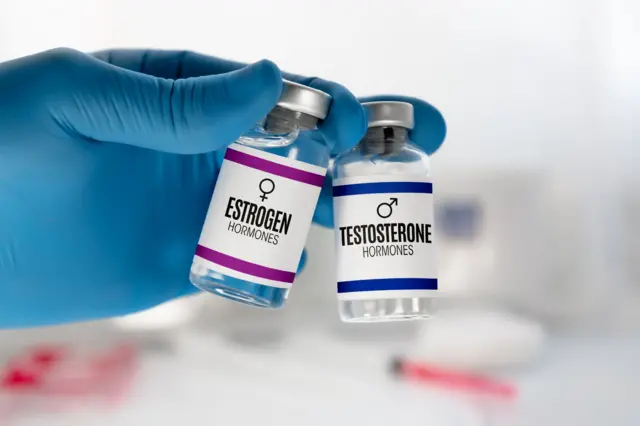
ISTANBUL (Medyascope) – In June 2025, Turkey’s Health Ministry released new regulations banning access to hormones and puberty suppressants for those under the age of 21. Starting in September 2025, access to these medications requires the approval of a board consisting of seven specialist physicians. Medyascope spoke to lawyer Furkan Yurt and patient Ecmel Deniz to make sense of the new regulations, which have added major bureaucratic hurdles to the gender transition process.

Turkey introduces new restrictions on gender transitions
By Yağmur Karacimşit • Medyascope
LGBTI+ organizations in major Turkish cities such as Ankara, Istanbul, Izmir, Mersin, and Çanakkale made major announcements following the introduction of these new restrictions, characterizing them as “not just bureaucratic regulations, but a major health risk.”
Existing regulations on gender transitions in Turkey
Prior to the introduction of the new restrictions in 2025, gender transitions in Turkey were governed by a 1988 law, which was followed by an amendment in 2002.
According to this law, those wishing to undergo a gender transition in Turkey must be at least 18 years old, unmarried, and have their “transsexual” status documented by a medical board report from a research hospital.
Additionally, the applicant was required to submit a second report issued by a qualified medical board stating that they are “mentally and physically fit for gender reassignment.”
“This has become more of a bureaucratic process than a healthcare service”
Forkan Yurt, a lawyer from the Social Policy, Gender Identity and Sexual Orientation Studies Association (SPoD), described the process an individual must go through in order to receive gender-affirming care in Turkey:
After an individual applies to a psychiatric clinic, they undergo a 6-month observation period to receive a diagnosis of “gender dysphoria.” Yurt added that the person can be referred to endocrinology only after the doctor’s opinion is approved by a council of relevant specialists from the hospital.
According to Yurt, courts now require not only psychiatric reports but also broad committee reports from many different branches such as urology and endocrinology.
Ecmel Deniz, a patient who recently started the process, described it as follows:
“Starting a gender transition in Turkey bears greater resemblance to a complex bureaucratic process than it does to a basic healthcare service. The hardest part for me was the long psychiatric observation period that was required before I was able to start with the hormone therapy. This phase took about two years.”
Legal process and digital barriers
Yurt also described how the addition of a new technical department called “medical genetics”, which is not available in every hospital, has added yet another barrier for those seeking gender-affirming care. Experts from a “medical genetics” department are required for any health board approving gender transitions in Turkey.
Additionally, glitches in Turkey’s ‘e-prescription’ mobile app have made access to hormones difficult for transgender individuals. Yurt described how a patient seeking hormones is often confronted with an error code saying ‘diagnosis-drug incompatibility’ when trying to use the app. He described these glitches as a ‘backdoor intervention’ by those seeking to obstruct access to gender-affirming care in Turkey.
Daily life for trans individuals in Turkey
Ecmel Deniz described the process as “uncertain and tiring”, saying that the most support came from other trans individuals and solidarity organizations rather than from Turkey’s healthcare system itself. Describing how every trans person’s needs are different, Deniz said:
“Every trans person’s needs, expectations, and relationship with their body and identity are different. Not everyone wants the same medical interventions, yet a single, uniform approach to the process is being imposed in Turkey. This process should be personalized; it should be based on the individual’s needs, consent, and bodily autonomy.”
The city Deniz lives in also lacks a hospital capable of approving and carrying out a gender transition under the new rules, meaning that frequent and expensive trips to Istanbul were necessary to carry out the procedure. Deniz described this process as “both economically and emotionally exhausting”.
“Every trans person’s needs, expectations, and relationship with their body and identity are different. Not everyone wants the same medical interventions, yet a single, uniform approach to the process is being imposed in Turkey. This process should be personalized; it should be based on the individual’s needs, consent, and bodily autonomy.”
Written/translated for Medyascope by Leo Kendrick | Turkey introduces new restrictions on gender transitions