ISTANBUL (Medyascope) – Iranians living in Turkey hold sharply differing views about the clerical establishment in Tehran and the recent air strikes carried out by the United States and Israel against Iran. Some say the ruling clerics should leave power but oppose foreign military intervention, while others argue that Iran must defend itself against outside attacks.
By Emre Berke Yaşar • Medyascope
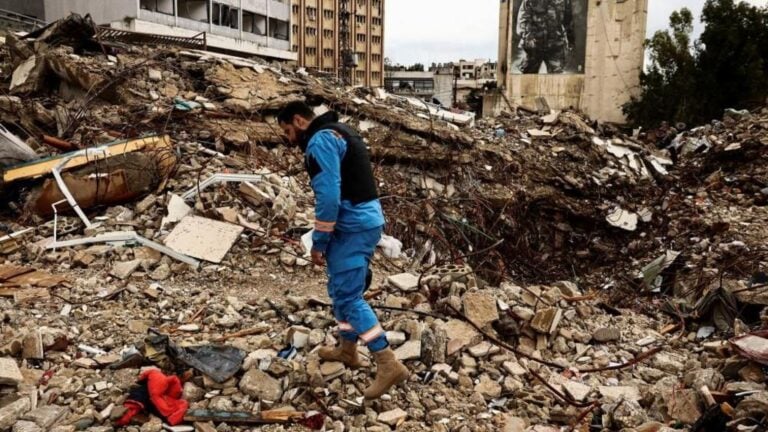
In recent months, protests in Iran that initially began over the country’s economic situation spread across the country and evolved into broader demonstrations against the political system. The unrest was followed by US and Israeli air strikes on Iranian targets, further deepening debates both inside Iran and among Iranians abroad.
Reporters spoke with several Iranians now living in Turkey about their views on the clerical regime — commonly referred to in Turkey as the “mullah regime” — and the foreign attacks targeting Iran.
“I belong to Turkish culture”
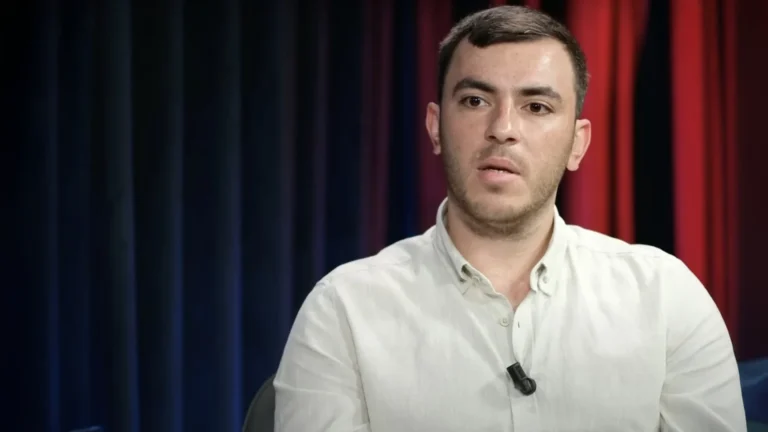
Adil, an Iranian citizen from the north-western city of Tabriz, has lived in Turkey for three years. A painter and academic working in the arts, he says he left Iran partly because of the difficulties he faced due to his Turkish identity.
Millions of ethnic Turks live in north-western Iran. While they speak a language closely related to Turkish, many say their cultural and linguistic identity receives little recognition in public life.
“In Iran we live among the Turkish population and have our own way of life,” Adil said. “Among us, being Turkish comes first — before being Muslim.”
He said he experienced problems during his academic career because he did not conform to cultural expectations associated with the Persian-dominated establishment.
“For example, in universities you are expected to adopt certain cultural habits associated with the Persian elite,” he said. “If you do not integrate into that culture, it becomes almost impossible to advance in academia.”
Adil says he eventually left his university position after eight years, believing that people close to the clerical establishment had blocked his career because he maintained his own cultural identity.
He also rejects the label “Azeri Turk,” saying the community simply considers itself Turkish.
“You can speak the same Turkish used in Istanbul and live comfortably in Tabriz,” he said. “The culture we want to live with is Turkish culture.”
“You can’t even give your child a Turkish name”
Adil also claims that restrictions on Turkish language and culture persist in Iran.
He said that when he worked in publishing, attempts to produce children’s books in Turkish were blocked.
“In Iran you still cannot freely give your child a Turkish name,” he said. “Six months ago a father wanted to name his daughter ‘Pınar’. The registry office refused to record it. He went to court, won the case — but the name was still rejected.”
According to Adil, such incidents illustrate the difficulties faced by those who want greater public recognition for Turkish language and identity in Iran.
“We want the clerics to go — but…”
Despite his criticism of the authorities, Adil says foreign attacks on Iran also provoke strong emotions.
“We very much want the clerics to go,” he said. “But when another country attacks our homeland, it hurts us deeply.”
He also claimed that a large number of people were killed during recent protests in Iran, arguing that such violence has further undermined the government’s legitimacy.
“Forty days ago, a major massacre took place in Iran. Young children were killed. According to the Iranian state, 2–3 thousand people died during the protests, but as far as we can tell, around 40,000 people were killed. After killing 40,000 people in just two nights, a government inevitably loses whatever legitimacy it still had among the population.
For example, one father lost his child, but the authorities refused to return the body. In some cases, families were asked to pay in dollars for each bullet that remained in the corpse before they could reclaim it.”
Yet he believes external military pressure can unintentionally strengthen the government by encouraging people to rally around the state during wartime.
“The regime oppresses people continuously,” he said. “But during a war it tries to unite everyone around itself.”
“Iran’s problems are an internal matter”
Arzu, another Iranian living in Turkey, offers a different perspective.
Born in Iran to an Iranian father and a Turkish mother, she moved to Istanbul with her family because of her mother’s ties to Turkey. She says their move was not motivated by political pressure.
“We didn’t come to Turkey because we were escaping the regime,” she said. “My mother loved Turkey and had family here. We still travel back and forth to Iran.”
Arzu strongly criticizes Israel’s attacks on Iran.
“I do not see Israel’s attacks as acceptable,” she said. “They violate our sovereignty.”
She believes Iran’s domestic political problems should be resolved internally rather than through foreign intervention.
“For years we were told that the clerics were entirely bad,” she said. “But they are defending the country against Israel. If they were not there, perhaps Israel would have already occupied Iran.”
While acknowledging that the government has flaws, including its policies toward women, she says such issues should be addressed by Iranians themselves.
“Iran’s internal matters must be solved by the Iranian people,” she said. “It is not right for the United States or Israel to interfere.”
“I cannot defend such a regime”
Yasemin, 33, who moved to Istanbul with her husband after living in Tehran, describes daily life under Iran’s political system as increasingly restrictive.
She met her husband in Paris, where the couple enjoyed a more liberal lifestyle before returning to Iran.
“When we moved back to Tehran, our lives changed suddenly,” she said. “Things that were normal in Paris became impossible.”
She said even simple activities — such as walking hand-in-hand in public, drinking wine in a restaurant or wearing certain clothes — could cause anxiety.
“After a while we felt like we couldn’t breathe,” she said.
According to Yasemin, the political system exerts a heavy influence over everyday life in Iran.
“Iran is a great civilization,” she said. “But today there is very serious control over how people live — how they dress and how they behave.”
She says she cannot support the clerical establishment.
“The clerics are one of the worst things that happened to Iran,” she said. “Before them the country was more open to the world.”
Yasemin also pointed to opposition figure Reza Pahlavi, the son of Iran’s last shah, as one of the most prominent figures among Iranian opposition groups abroad.
“I am not someone who wants a monarchy again,” she said. “But Reza Pahlavi is currently one of the best-known and most organized figures in the opposition.”
While she does not support foreign attacks on Iran in principle, she says some people inside the country believe the strikes are aimed at the ruling establishment rather than the population.
“Many people in Iran think Israel is targeting the clerical regime, not the Iranian people,” she said. “But of course I do not want any country to attack another.”
Referring to those killed during recent protests, she added: “So many people died simply because they wanted a freer life. I cannot defend a regime that has caused that.”
Iranians in Turkey: ‘We want the mullahs gone, but bombs hurt us just as much’ | By Emre Berke Yaşar | Translated by Medyascope English Newsroom