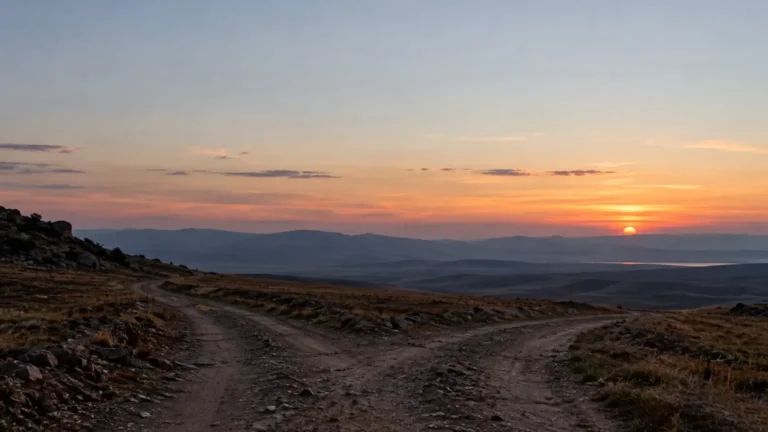
KANDIL MOUNTAINS – IRAQ (Medyascope) – Medyascope interviews senior PKK commander on Kurdish peace process… Editor-in-Chief Ruşen Çakır interviewed Duran Kalkan, a senior commander in the Kurdish Workers Party (PKK), regarding Turkey’s ongoing Kurdish peace process. The interview, recorded in the Kandil Mountains of northern Iraq, was the first interview with a senior PKK official since the start of the peace process nearly two years ago outside of official statements released by the organization’s media wing.
Translated by Leo Kendrick • Medyascope
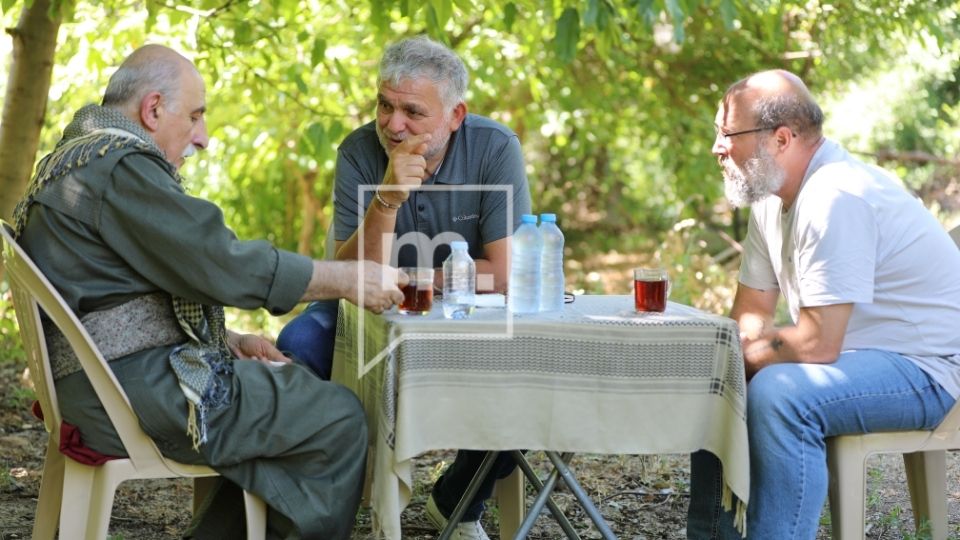
Kalkan, a founding member of the PKK, noted that the current peace process is different from a similar failed process from 2013. Kalkan referenced the need for non-military solutions to conflicts in light of the Israel-Gaza War, saying, “There is also the process that has unfolded since 2015—the reality of war. That, too, has brought new factors to light. It’s not like it was before. We have reached a certain point through our own struggle. The question ‘How much further can this go?’ has arisen. Where will this lead? A solution is needed. Not everything can be resolved through war. War brings issues to the surface, but politics often resolves them. Therefore, the time has come for both a solution and politics.”
Kalkan described how he and his colleagues were surprised by imprisoned PKK leader Abdullah Öcalan’s February 2025 declaration calling for the dissolution of the PKK—”We do not want a nation-state, we do not want autonomy; there is no pursuit of any kind of culturalism”—Kalkan said:
“The path forward for certain things is truly blocked. There are many anti-democratic approaches. Politics have not been functional. So, yes, there was some surprise. However, we were prepared and organized; as an organization and as a leadership, we evaluated the situation immediately. We provided the quickest possible response. We issued a statement on March 1st, 2025 and declared a ceasefire to serve as an immediate reply. We had that level of preparedness in place.”
To watch the full interview, click here.
“We cannot eliminate the possibility that this is all a political game”
In the interview, Çakır referenced the widespread public perception in Turkey that the ongoing peace process is being used as a tool by President Erdoğan’s government to further consolidate power. Duran Kalkan responded to this proposition, saying:
“Well, this may be all a game [by the Erdoğan government]. We aren’t ruling that out. It is a matter for each party to decide for itself; it is a situation in which each party must act individually. We, too, would never claim there is absolutely no ‘game’ involved. We do not share the exact same views as those issuing the calls or those with whom we are debating, and we are not proceeding based on mutual trust or a shared mindset. Everyone is acting according to their own perspective. However, does this open the way for political action, even if a game is involved? Does it create opportunities to do new things? That is our approach.”
Kalkan described his surprise at MHP Chairman Devlet Bahçeli’s October 2024 handshake in parliament with pro-Kurdish DEM Party officials which launched the peace process:
“If such a move comes from Devlet Bahçeli under these wartime conditions, it is neither wrong nor abnormal; in fact, it is close to the right course of action. After all, this kind of development does not originate with those who do not fight; those who do not fight have always called for an end to the war anyway. What matters is not that they say there should be no war; it is significant when those who are fighting say there should be no war, for that is what can bring the conflict to an end.”
Bahçeli, an ultranationalist coalition ally of Erdoğan, had previously been known as a hardliner on the Kurdish issue, calling for the execution of imprisoned PKK leader Abdullah Öcalan.
No more arms
Saying the days of the PKK’s armed conflict with the Turkish state were in the rearview mirror, Kalkan said the following:
“A call for peace was made [by Abdullah Öcalan]. We viewed this as very timely, meaningful, and even somewhat overdue. I can state that clearly. Certain circles, both internal and external, heavily incited Turkey toward war with us. It did not originate with us; it originated there. As the process unfolded, we made our own decisions. We held our congress and adopted our own resolution. We seek to bring about change, transformation, and renewal. We have implemented a strategic shift. I can say this: there will no longer be a war like the one in the past. In other words—unless conditions change, unless a new congress takes place (and it is up to the organization to decide how or if that happens), and unless a decision for a new strategic shift is adopted—we will not, with our current resolve, be a force that wages armed conflict against Turkey; we have brought an end to this. Of course, should we come under attack in the current situation, we will defend ourselves; that is our stance. However, what we desire is for the path to politics to be opened and for the opportunity to engage in democratic politics to emerge. We want to participate in this process through democratic politics, in a way that benefits both the Kurds and Turkish society—serving them in the political arena.”
“CHP should concern itself with Turkey’s issues”
Stating that Turkey’s main opposition Republican People’s Party (CHP) needs to be more active in the peace process, Duran Kalkan said:
“What is their concern? I think it would be best for them to re-examine their own priorities. This narrow partisanship is what has brought the CHP to this state. We do not find this right; we do not approve of this political approach. Consequently, we believe that this is the very politics that causes the CHP to regress rather than advance or succeed. Instead of engaging in such intense internal power struggles, if they were to concern themselves with Turkey’s problems and issues—such as the question of democracy, the issue of Kurdish freedom, and Turkey’s security concerns… Consider the war in the Middle East; it is happening right around Turkey, and it impacts the country directly, around the clock. There is no telling what tomorrow holds. If they made these issues their concern, the CHP could emerge from this narrow impasse. I believe they could then communicate more effectively with Turkish society.”
In late May, a Turkish court reinstated the unpopular former chairman of the CHP, Kemal Kılıçdaroğlu, ousting the party’s elected leadership. While comments by Kalkan and official Turkish government sources characterize the events as an internal schism within the party, many analysts and experts see the incident as an attempt to handicap the country’s largest opposition party through judicial means. Ousted CHP leader Özgür Özel is now in the early stages of forming a new political party, likely to be announced in late July.
The desire to engage in legitimate politics
Çakır asked Kalkan whether he and his colleagues ever intend to return to Turkey and enter the political arena, to which Kalkan replied:
“Why not? I mean, is it impossible? There are difficulties, but why not? It is possible. If we look at events around the world, at what has transpired, and at what is happening in Turkey… Let’s evaluate the processes of 10, 20, or 30 years ago. Is Turkey the same as it used to be? No; many changes have occurred. Couldn’t this change happen, too? It could.”
Kalkan called for the release of imprisoned Kurdish political leader Selahattin Demirtaş, saying:
“Legal decisions have already been made [by the ECHR]. He should have been released; the remaining issue is political. The rulings of the European Court of Human Rights (ECHR) are binding within Turkish law. However, Turkey does not implement them. We want not only Selahattin Demirtaş but all politicians to be released. We want everyone in prison to be released; their cases are entirely political anyway. Had they been released, they could have played a significant role in this process from the outside.”
“NATO is a threat to Turkey”
Arguing that NATO poses a threat to Turkey, Duran Kalkan concluded by saying:
“Let me mention one final point: there is a threat facing Turkey. You might ask, ‘Why do you say this?’ The threat exists; the danger has not vanished. NATO came to Ankara and held a summit; there were some pleasantries exchanged. Yet, NATO’s actions are clear: it thinks of nothing but armament and war. It offers nothing else to Turkey. Instead of expecting benefits from NATO, Turkey should look to our peace process; it would reap far greater benefits. That is certainly the case. In this regard, the threat to Turkey has not disappeared; on the contrary, it persists. War has reignited in Iran. It is unclear where things will lead. Turkey is encircled by this war, and the Kurds are right in the midst of it. In other words, there is a shared destiny. Our approach is not to seek gains by fighting in the midst of war, but to achieve success through democratic politics—so that everyone wins. Let the win-win principle be applied. That is our stance.”