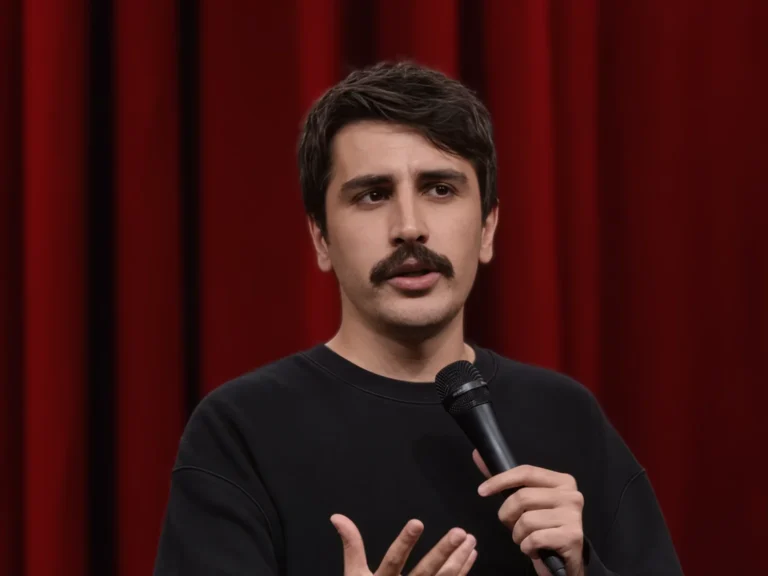
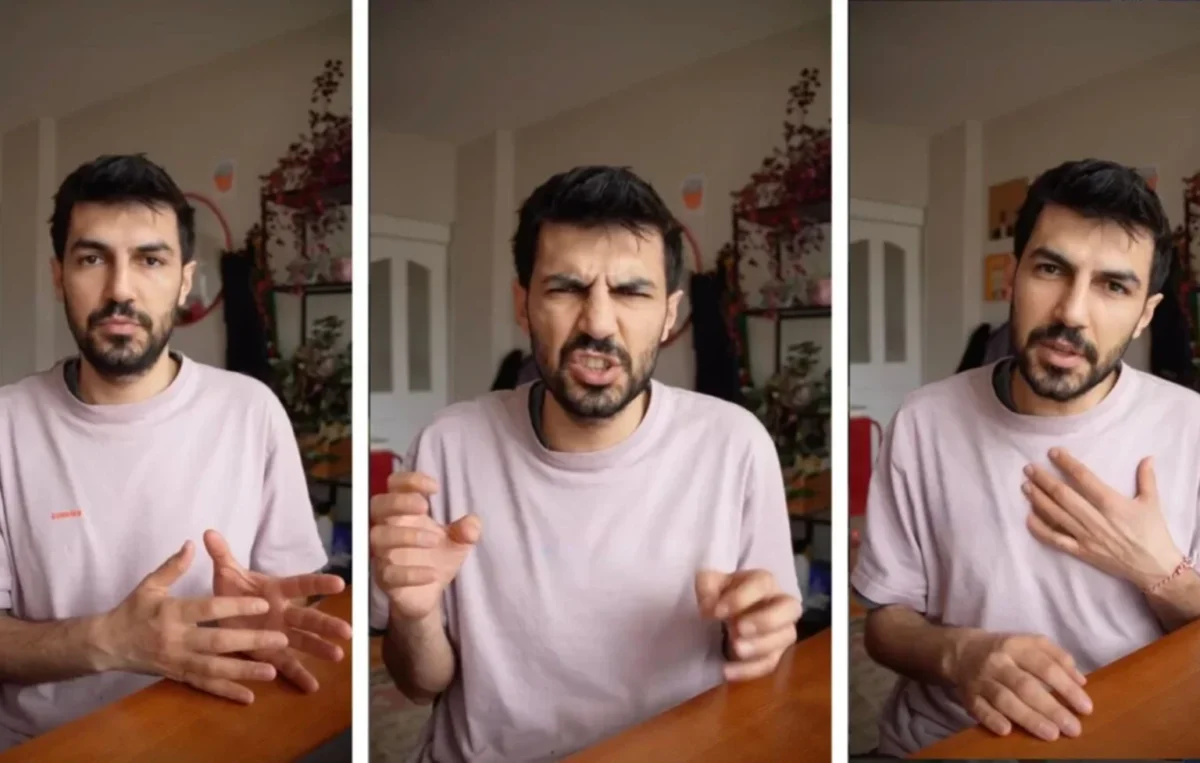
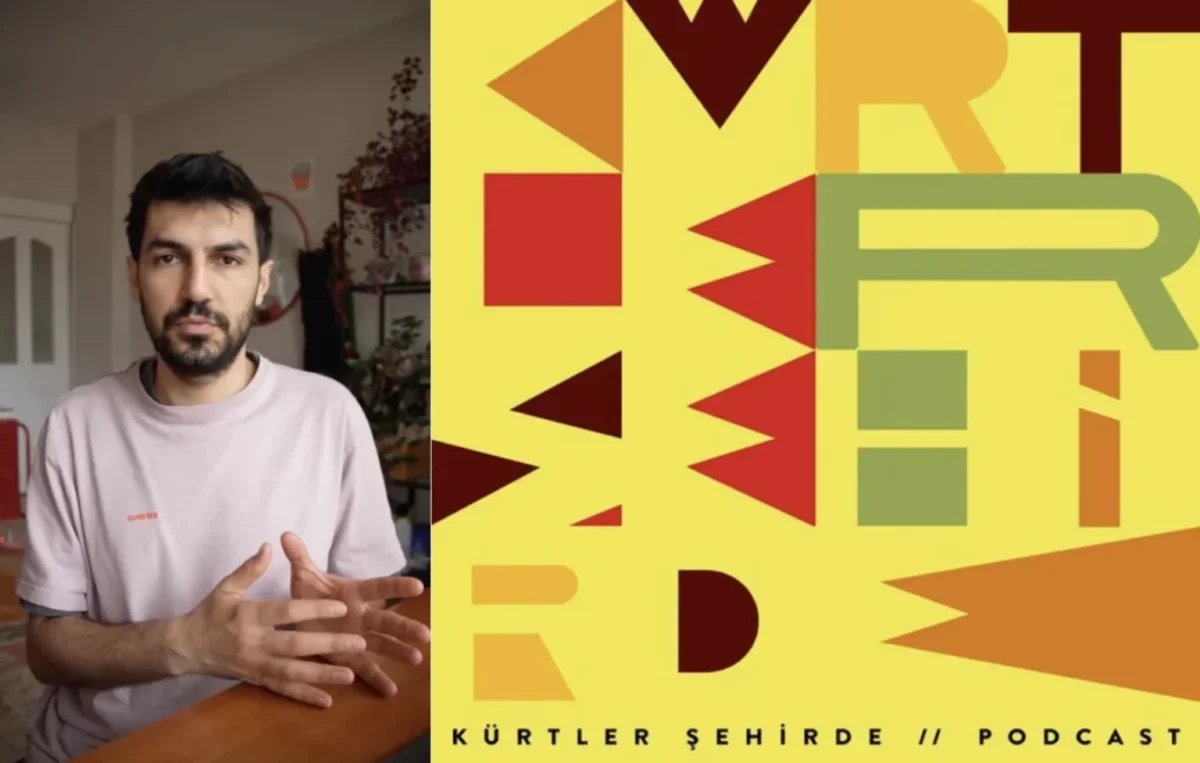
Turkey’s metropole-dwelling Kurds stand at the epicenter of sociopolitical debates, and are increasingly seen as an electoral juggernaut with every election cycle. Yet within the Kurdish sphere itself, there is ongoing debate as to what extent they have become assimilated and ‘Turkified’. Medyascope discussed these tensions and the nature of metropolitan Kurdishness with Mehmet Uğur Korkmaz, whose podcast *Kürtler Şehirde* (Kurds in the City) has garnered widespread acclaim.
Key Takeaways
- Kurdish identity in metropolitan areas, especially Istanbul, is complex and evolving, influenced by assimilation and the urban experience.
- The podcast *Kürtler Şehirde* aims to document and explore these tensions, fostering a sense of community among young Kurds.
- ‘Turkification’ for many means living authentically as oneself without imposed identities, challenging state narratives.
- Cultural production in cities transforms traditional Kurdish identities, leading to new aspirations and expressions.
- The ongoing Kurdish peace process holds both hope and fear, emphasizing the importance of inclusive peace for all communities in Turkey.
By Mehmet Tatlı • Medyascope Contributor
What does the name “Kurds in the City” mean? If we go back to the early days, what specific need gave rise to the podcast?
There are actually a few foundational sentiments at play. One is my own personal story: I grew up as the child of a Turkish mother and a Kurdish father. During my early youth, depending on the context, I would sometimes suddenly become “Kurdish” and at other times “Turkish.”
As I became more politically conscious, I began to position myself increasingly within a Kurdish identity. This process compelled me to reflect on the experience of “becoming Kurdish”—questions such as: What is a Kurd? Who qualifies as a Kurd? Is this identity innate, or is it a political state of being?
Another foundational sentiment was the fact that so much of what we were experiencing was going largely undocumented, and that a broad segment of society in Turkey remained completely unaware of these experiences. This state of invisibility intensified my need to tell this story.
The third—and perhaps most defining—sentiment stemmed from the observations regarding the city found right at the very beginning of the PKK’s founding manifesto. In that text, the city was depicted as a monster lying in wait to devour the Kurds. Yet, looking at the situation today, Kurds largely reside in cities—and, crucially, they still manage to remain “Kurdish.” I wanted to delve a little deeper into this contradiction.
Which segments of society make up the majority of your audience? What kind of bond has formed between you and your listeners?
My listeners are predominantly young Kurds—young people who feel invisible, who struggle to establish a direct connection with their Kurdish identity or the Kurdish freedom movement, and who, as a result, tend to hold back or conceal their identity.
The feedback I receive and the relationships I’ve built suggest that the podcast has had a healing effect on its listeners. I believe that realizing they aren’t the only ones to have gone through similar traumatic experiences provides them with a sense of relief. And I end up becoming friends with almost all of them. Whenever I visit a city, I invariably sit down with a listener—just to chat, hang out, grab a bite to eat… My listeners even form friendships with one another, independent of me. We are more than just friends; we function almost like a solidarity network. We consult one another, confide in each other, and work together to find solutions. We are growing and evolving together. It is a truly wonderful feeling, and I strive to prove myself worthy of it.
What is “Turkification”?
For me, ‘Turkification’ is about being able to live out my own identity. It is the right to exist with this identity—and to make my own decisions—without being compelled to live out a supra-identity, culture, or ideology defined and imposed by the state. Consequently, it is not a centralized or monolithic concept.
Despite a regime that declared Istanbul Turkish the official language of instruction while excluding all other languages, dialects, and vernaculars, a person who speaks Turkish using their own regional accent is, in fact, just as much of a ‘Turk’ as anyone else. In other words, being Turkish does not equate to being from Istanbul, urban, modern, or highly educated. Viewed from this perspective, we—as various peoples—suffer from no deficiency or disadvantage. For we can be both Kurdish and ‘Turkish’.
Do you believe that Istanbul—home to approximately 5 million Kurds—will emerge as a new center for the reorganization of Kurdish identity?
Both historically and practically, Istanbul is the largest and most diverse city in the region. In fact, I have always felt that, rather than being merely a city of the Turkish Republic, it remains, in essence, an Ottoman city. This is because, ever since the founding of the Republic, while a monolithic mindset sought to homogenize all cities—thereby suppressing distinct identities and cultures—Istanbul evolved into a sanctuary where these very identities could take refuge. Today, all the peoples of Anatolia—Syriacs, Armenians, Kurds—as well as immigrants from Central Asia and Eastern Europe, constitute integral elements of this city. Although prejudices certainly exist, everyone here is accustomed to encountering one another. Consequently, it is impossible to construct a national identity here in isolation—detached from all these interactions and confined within a closed-off, insular form. As evidenced by the political movements of the late Ottoman era, Istanbul is—quite naturally—the place where the interaction among diverse peoples and political currents reaches its zenith. Therefore, the identity and political movements that emerge from this milieu will be multilingual, vibrant, and dynamic—in short, they will be inclusive; indeed, they must be.
To what extent can cultural production processes in metropoles transform traditional Kurdish identity?
Culture, as a phenomenon that changes very slowly due to various reasons such as geography and climate. And if you live in a rapidly capitalist place, your culture also changes rapidly. Indeed, all the peoples of Turkey have experienced this. The geography, which is the most basic determinant of culture for everyone, has also changed with migrations from villages to cities. Is the Kurdish freedom movement and the Kurdish women’s movement and image organized around it, for example, a result of something inherent about Kurdishness? If so, why isn’t there such a strong women’s movement in other parts of Kurdistan? Or how possible is it for a new musician to mention the birds and plants mentioned in old folk songs when they don’t exist in the city?
If we act with the anxiety of preserving or remaining faithful to an imaginary “Kurdishness,” we create a person trapped between the past and the future. Kurds in metropolitan areas—that is, us and future generations—will organize themselves according to their needs and aspirations, transforming their identity accordingly. This is inevitable. What is crucial here is resisting the assimilationist mindset that takes over and marginalizes Kurds. That, too, is partly a matter of politics.
For many years, Kurdish politics viewed the metropoles as “temporary” spaces, attempting to cultivate a political psychology centered on a “return to Kurdistan.” As we enter the 2020s, to what extent does this psychology still resonate within the Kurdish communities of metropolitan Turkey?
It is a kind of state of homelessness—a condition, I suppose, similar to that of immigrants from Turkey living in Germany. Most of us no longer have a village to which we can return and settle down. And even if such a place still exists, the lifestyle there is not one to which we could adapt. Yet, many of our parents still harbor the dream of returning once they retire—and indeed, some do return. We, the generation born and raised in the cities, however, have found ourselves—for better or worse—stuck right here. It is a state characterized simultaneously by a sense of being hemmed in and a sense of liberation. In the city, just as you are free to assert your own existence, you are also “free” to undergo assimilation.
How do you assess the political representation of this “metropolitan Kurdishness”? As someone born and raised in Istanbul, what observations have you made on this topic?
That is a very difficult question for me to answer—perhaps even one that exceeds my grasp. Nevertheless, let me attempt to address it. First, it is necessary to unpack the concept of “metropolitan Kurdishness,” for it is by no means a singular or monolithic identity. Take, for instance, Kurdish Alevis: even this category is not internally uniform; a Kurdish Alevi from Maraş, for example, may possess a vastly different political identity and way of life compared to a Kurdish Alevi from Dersim or Malatya. It is possible to extend this spectrum of diversity even further.
Despite this heterogeneity, there was—for a time—a political project capable of bringing together these disparate segments of the spectrum and generating a shared sense of collective enthusiasm: the Peoples’ Democratic Party (HDP). This project served as the very space where the “metropolitan Kurdishness” you mentioned first attained full visibility and found its most effective representation. However, the events of the past decade have severely eroded that bond. Common ground has shattered, and we have entered a phase where no one listens to anyone else. Everyone has retreated into their shell.
This state of constriction is not an issue affecting only the Kurds; it applies to all social groups. The DEM Party—as it is known today—has fallen far short of the HDP, both in terms of its discourse and its capacity for representation. This entire process has resulted in losses for the people of Turkey in every respect. Indeed, the current state of the country speaks for itself.
A return from this point is still possible. The Kurds living in metropolitan areas, the Kurdish political movement, and other social groups must once again emerge from their shells; spaces must be created where they can listen to one another and mend their bonds. However, one of the critical thresholds in this healing process is the immediate release of Selahattin Demirtaş—a figure who serves as a tremendous facilitator in forging these very bonds. Naturally, along with him, all other political prisoners must also be set free without delay.
How do you view the ongoing Kurdish peace process?
On one hand, there is tremendous hope; on the other, a faint sense of fear. I’m old enough to know that anything is possible at any moment, yet I am still young enough to see things optimistically.
Peace is not merely an agreement or ceasefire between two armed actors. Nor is it, by any means, the capitulation of one side. With such a narrow perspective, no one can truly reconcile anyone. Peace must be honorable, from the very top down to the very bottom. Peace means a young Kurdish student sharing a dormitory room with Turks can exist without fear and without being subjected to any racism; it means Armenians, Alevis, and all other peoples can engage with the broader society and realize their own potential openly.
They are attempting to confine, suppress, and efface all our dreams for Turkey. Yet, nothing has truly changed: we belong to this land, and we are here to stay. Life goes on. And we certainly have no intention of hiding from our fellow human beings what is already known to God. I still—and steadfastly—believe that we can build a beautiful life together.
Traditional Kurdish culture, rather than encouraging the individual to stand out in digital media, tended to view visibility on social media as a form of impropriety—or even as a sign of having lost one’s true identity. Is this still the case? Have you—and other Kurdish friends of yours who create content—received reactions along these lines from the Kurds in your social circles?
Actually, there are two sides to this issue. The first is the static image of the Kurd manufactured by the state through education and media. What is it? It is a figure coded as speaking with a heavy accent, being coarse, ignorant, unable to adapt to urban life or modernity, and—consequently—prone to becoming a “terrorist.” This is, of course, the stereotypical image that fuels all manner of racist prejudice.
The second is a different “ideal” Kurdish stereotype—one derived both from the traditional way of life of the Kurdish people and from the codes of the Kurdish freedom movement: A figure who is politically minded—someone who, as you put it, does not seek the spotlight—who remains in the background, who does not truly assert themselves as a distinct subject, yet who is always diligently doing their work.
Perhaps the greatest struggle for the urban Kurd lies in being unable to fit into either of these molds. We certainly do not fit the first one. As for the second—while we may align with it ideologically—we cannot fully integrate into it due to the nature of our daily lives and our visibility.
The reactions I encountered had less to do with the specific content I’d produced and more to do—directly—with my very mode of existence. However, this, too, is changing. This is because, for the younger generation, establishing a presence and achieving visibility on social media is of great importance. They feel a sense of relief when they see people who are just like them. At least, that is the general tenor of the comments I receive from my young followers.
Most people first got to know you through your podcast Kürtler Şehirde (Kurds in the City). Do you have any other projects? What else are you currently working on?
When I first started the podcast, I was working as a director for a YouTube channel. In truth, I was just an ordinary person, going about my daily work. As the podcast gained visibility, my professional life began to suffer setbacks in various ways. Over time, a “glass ceiling” formed above me. Following various jokes and subtle instances of workplace harassment, I left my job. Since then, I have been working in independent media. I also recently—and somewhat unexpectedly—became an influencer. But let’s not take that part too seriously.
Kurdish podcaster Mehmet Uğur Korkmaz speaks to Medyascope: “We have no village to return to in Kurdistan.” by Mehmet Tatlı | Translated by Leo Kendrick for Medyascope
“We have no village to return to in Kurdistan”: Kurdish podcaster Mehmet Uğur Korkmaz speaks to Medyascope