The Equation of History: A Window of Opportunity for Turkey • Opinion piece by Dr. Onurcan Yılmaz
In 2010, Nature asked leading scientists a simple question. What will happen in the next decade? The answers ranged from climate forecasts to economic projections. One stood out as radically different. Peter Turchin, a historian with a background in theoretical biology, ran his mathematical models and announced his conclusion. The US would experience a serious political crisis around 2020. Social cohesion would deteriorate, political violence would increase, and polarization would deepen. When 2020 arrived, the world was shaken by a pandemic, the storming of the U.S. Capitol, and a tsunami of polarization. The prediction had proven disturbingly accurate. Turchin was not a prophet. He studied history the way a physicist studies matter, as a system driven by measurable forces. This essay uses the logic of that system to read today’s world and the critical tradeoffs facing Turkey.
Key Takeaways
- Peter Turchin’s concept of cliodynamics reveals that societies undergo identifiable cycles driven by measurable forces, leading to politically unstable conditions.
- The convergence of popular immiseration, elite competition, and erosion of state capacity creates a high probability of societal disintegration.
- Turkey faces significant structural pressures like inflation and societal loss of control, putting its political actors to the test in the coming year.
- Both government and opposition have critical tradeoffs; the government’s chance lies in reform-oriented strategies, while the opposition must convey economic credibility to gain voter support.
- An opportunity for democratization exists as global authoritarian trends weaken, but actors must recognize and respond to this window effectively.

Cliodynamics: The computational science of history
The discipline Turchin founded is called cliodynamics, a combination of Clio, the muse of history, and dynamic systems. Societies move in identifiable cycles driven by measurable forces, and these cycles are not fatalistic but mechanical. They tell us that when certain conditions converge, certain outcomes become highly probable. Much like a forest under the right conditions becomes increasingly likely to burn. When dense woodland, drought, and wind come together, fire breaks out, but you cannot predict exactly where the ignition point will be.
The model tracks three dynamics. The first is popular immiseration. Wages stagnate, debt comes to dominate daily life, and the future becomes impossible to plan for. People grow restless not because they earn less per se, but because they feel they have lost control over their own lives. The second is the intensification of elite competition. When the demand for power and status far exceeds the available positions, those locked out of the system become counter-forces that challenge the existing order. The rise of populist leaders and the spread of anti-system rhetoric are natural consequences of this dynamic. The third is the erosion of the state’s capacity to maintain social order and mobilize resources effectively. Institutions may remain intact on paper, but once they lose their functional capacity, they can no longer manage social tensions. When all three dynamics escalate simultaneously, societies enter a phase of disintegration. Polarization hardens, political violence becomes visible, and trust in institutions erodes rapidly.
History has confirmed this model repeatedly. In the final century of the Roman Republic, wealth concentrated in the senatorial class, smallholders lost their land, and competition for power descended into civil war. The French Revolution was the eighteenth-century version of the same dynamics. During the interwar period, inequality and power vacuums laid the groundwork for fascism. Yet in that same era, the New Deal emerged in the US, expanding state capacity and rebalancing the system. Nineteenth-century England, facing the Chartist wave (the mass reform movement of the 1830s and 1840s organized around working-class demands for political representation), averted revolution by broadening the space for representation. The pressure may be similar each time, but the outcome depends on how that pressure is met.
So why do societies respond to this pressure in such different ways? The structural picture drawn by cliodynamics leaves a very specific psychological imprint on individuals. Immiseration is not merely a material loss, it erodes people’s sense of control over their lives. When that sense of control weakens, the mind seeks compensation. Especially in societies where institutional trust is low, people gravitate toward simple narratives that identify who is to blame rather than engaging with complex explanations, and they turn to voices that promise certainty over ambiguity. The intensification of elite competition reinforces this tendency. When institutions become instruments of power struggle, public trust in those institutions dissolves, and conspiracy narratives become part of mainstream discourse. The erosion of state capacity then creates a security vacuum that converts this psychological terrain into political demand. In an environment where uncertainty and insecurity compound each other, the idea of strong authority becomes attractive, and authoritarian politics rises on precisely this foundation by promising both security and the restoration of what was lost.
The global picture and Turkey’s position
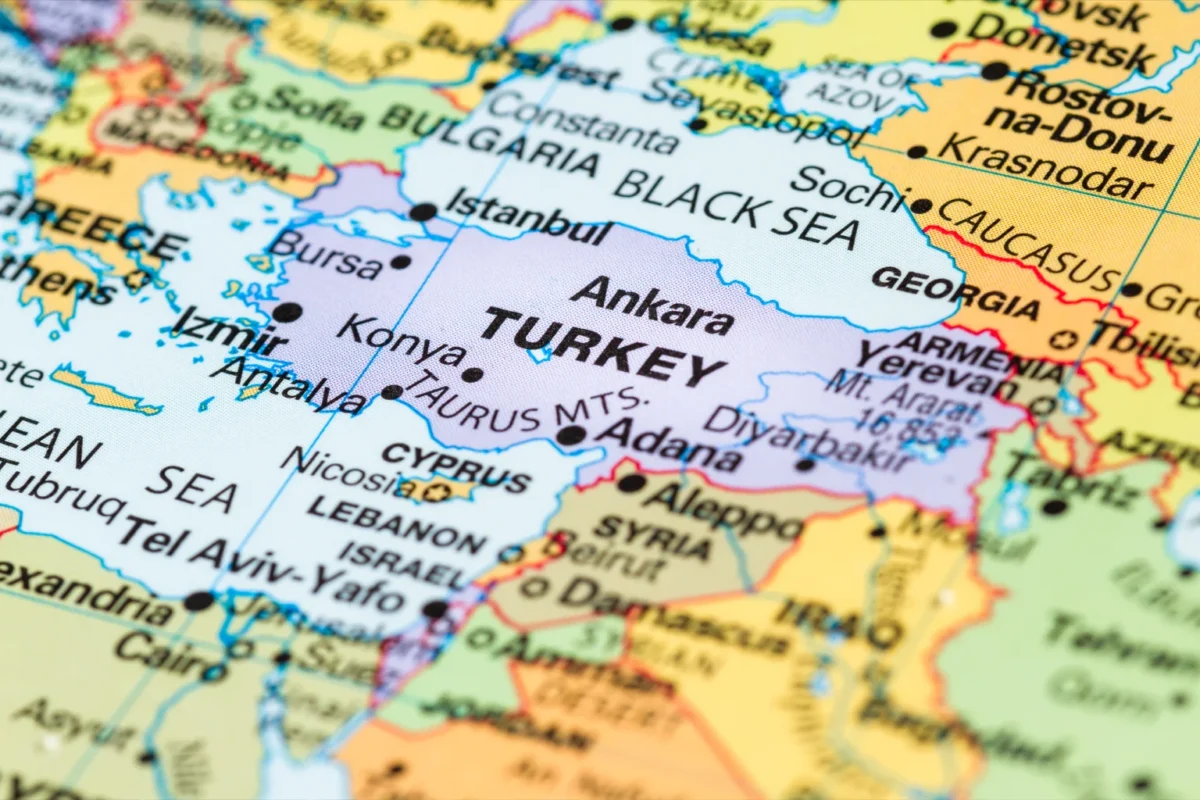
Today, these dynamics are converging on a global scale. The hegemonic rivalry between the US and China is dissolving the old order, and the new one has yet to take shape. The moves along the Iran, Venezuela, and Panama axis may appear disconnected, but read together they reveal a clear picture. The U.S. is working to constrict its rival’s access to energy, alternative trade routes, and financial room for maneuver. Yet the global wind is no longer blowing in one direction. Polls and elections in countries like Italy and Hungary show that authoritarian leaders in various parts of the world are beginning to lose ground. It is almost certain that Trump will become a lame duck after the November midterm elections. Sustaining authoritarian pressure on a global scale is becoming increasingly difficult, and this opens a window for Turkey as well.
For Turkey, the cliodynamic indicators are flashing red. Inflation refuses to come down, the middle class is losing room to maneuver as the country enters an election economy, and young people are losing their expectations for the future. There is also a quiet accumulation at the top. An educated, ambitious crowd that is being kept outside the gates is growing. Tension is building not only between the government and the opposition but within each bloc. Purges are underway across factional lines.
Institutions remain standing on paper, but if the car does not respond when you turn the steering wheel, the problem runs deeper than it appears. The failure of interest rate hikes to tame inflation is precisely the everyday manifestation of this disconnect. Moreover, a new variable is now in play. As Dubai’s claim to being a regional financial hub weakens following the Iran war and the security concerns it triggered, mobile capital is searching for a new harbor. Turkey, with its geographic position, young population, and infrastructure, could be one of the natural destinations for that capital. However, long-term capital does not flow to an arbitrary order. It demands legal predictability, institutional trust, and political stability. On this point, examples like Dubai stand out not only for their tax advantages but for the institutional security architecture they offer investors. Within the Dubai International Financial Centre in particular, the application of a system grounded in English common law, and the availability of international judges when parties so request, sends a powerful signal to investors that arbitrariness is constrained. Arrangements of this kind attract long-term capital by guaranteeing the predictability of rules rather than the power of the state. From a cliodynamic perspective, this situation points to both risk and opportunity at the same time. While capital moves away from countries that cannot provide these guarantees, the same current becomes a serious opportunity for those that can.
The tradeoffs of the coming year
The next year will be a real test of the capacity of Turkey’s political actors to manage structural pressure. Both the government and the opposition face serious tradeoffs, and the choices each side makes will take the country to very different places from a cliodynamic standpoint.
The government
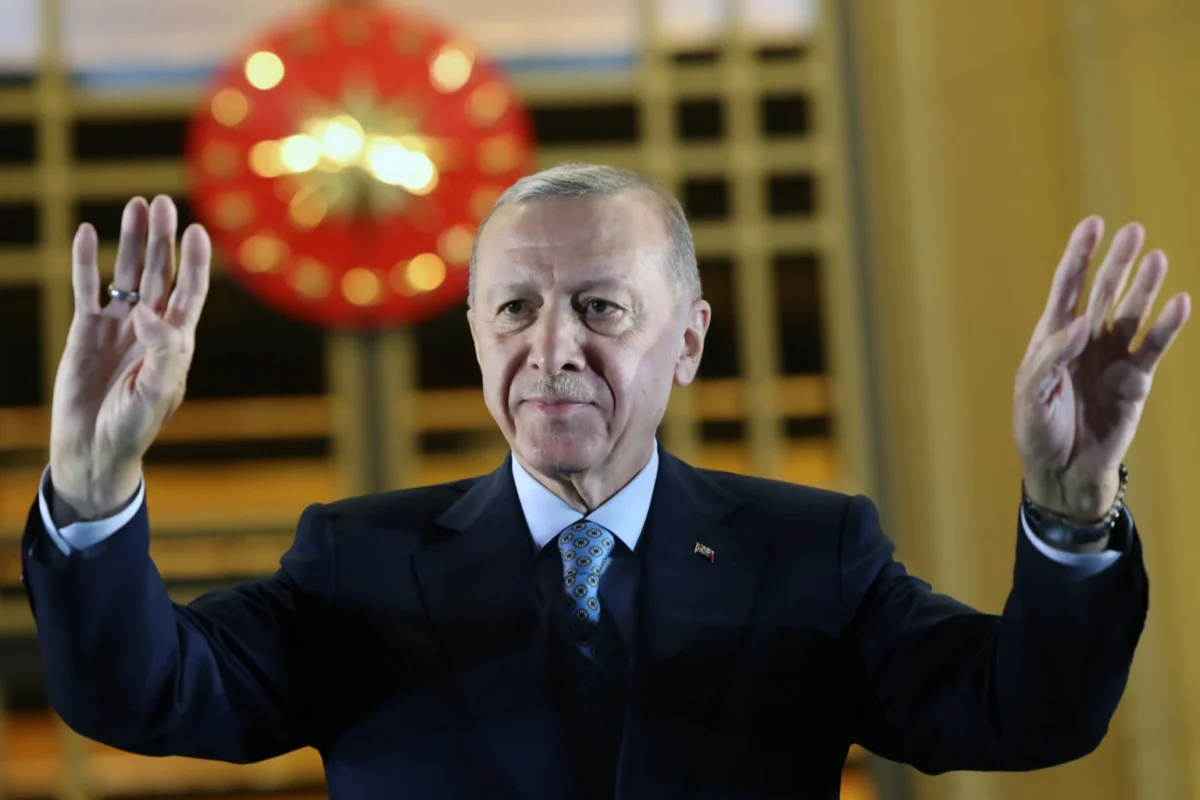
The picture for the government can be read as follows. Advancing the Turkish-Kurdish peace process, easing the channels of democratization, and making a push to become the harbor for new capital would, combined with growing economic relief as the country enters election economics, open the path to early elections. This path would also bring order to the post-Erdogan era by making the transition manageable. From a cliodynamic perspective, this is the reformist response that slows disintegration. History has shown repeatedly that this response works. In post-Franco Spain, Suarez managed a controlled democratization that kept the old regime’s actors within the system while preventing a social explosion. In South Korea, Roh Tae-woo, despite coming from within the military regime, oversaw the transition by pursuing democratic opening. In all three cases, actors from within the regime, rather than attempting to fully suppress rising social pressure and a legitimacy crisis, adopted controlled transition strategies that transformed the system while preserving it. When the government played the reform card, it both protected its own position and prevented structural fracture. These transitions, however, were made possible not by the will of a single leader alone but through the interaction of elite consensus and societal pressure.
The alternative is to preserve the status quo. A continuation of a structurally fragile equilibrium in which the appointment of government trustees becomes routine, the apparatus of repression is consolidated, and the economy leans on speculative short-term capital drawn by high interest rates, an arrangement that looks manageable until election day but compounds the underlying pressure. This path appears to preserve order, yet it multiplies the pressure beneath the surface. In the late Ottoman period, Abdulhamid II’s autocratic regime silenced the opposition but chose to defer rather than resolve fiscal collapse, administrative dysfunction, and ethnic tensions. This approach produced an appearance of stability in the short term. In the long term, however, it caused the accumulated structural problems to erupt on a far more fragile foundation and in a far more devastating manner. A similar dynamic can be observed in Venezuela. The intensification of political repression under Maduro, combined with economic uncertainty, accelerated capital flight. Although the regime managed to survive in formal terms, the economy entered a deep contraction, and this laid the groundwork for external intervention. Both examples point to the same fundamental mechanism. Authoritarian repression does not always result in a direct collapse, but it accelerates the dynamics of disintegration from within by eroding the system’s flexibility and predictability.
It is worth pausing here to underline a distinction. Repression produces order in the short run. It constrains the opposition, reduces visible chaos, and centralizes decision-making. But for investors, firms, and citizens, what matters is not the state’s power today but how predictable tomorrow’s rules will be. As the perception takes hold that the institutional framework can be altered arbitrarily, long-term planning becomes difficult, the risk premium rises, and capital quietly migrates to more predictable destinations. Restricting political competition outside institutional channels does not merely narrow the opposition’s room to maneuver. It also erodes the trust that underpins economic functioning. In the end, short-term control gains become a self-reinforcing spiral that feeds long-term economic fragility.
The Equation of History: A Window of Opportunity for Turkey
The opposition
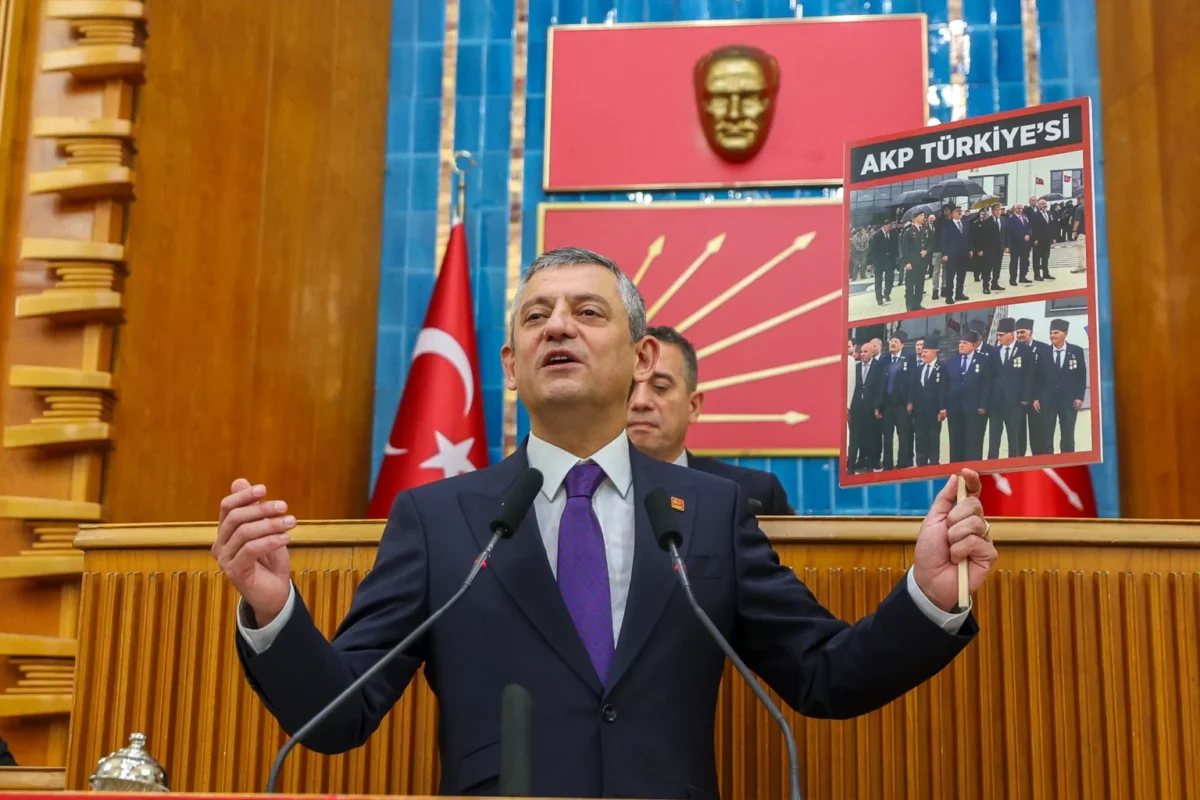
For the main opposition, the tradeoff is different but no less consequential. The factors that determine election outcomes are of course multilayered. The structure of polarization, media access, organizational capacity, and alliance architecture all come into play simultaneously. Yet in elections where economic crisis is the defining issue, one variable rises above the rest. The credibility signal the opposition produces regarding its ability to manage the economy. Electoral history has confirmed this pattern time and again. In 1992, Clinton positioned himself as a figure who could articulate economic pain in the language of the voter, and “It’s the economy, stupid” became the distillation of that positioning. In 1997, Blair put Gordon Brown forward as shadow chancellor, showing voters in concrete terms whose hands the economy would be in. In 2022, Lula chose Alckmin, a center-right figure, as his running mate, sending the same message to both markets and undecided voters. In Turkey after the 2001 crisis, Erdogan was similarly positioned as the leader of the team that correctly read the economic pain, and he won the 2002 election on the strength of that perception. In every case, voters were already dissatisfied with the incumbents, but what mobilized them was the opposition’s production of a concrete signal of control.
A similar dynamic was at work in the most recent U.S. election. Trump, foregrounding his businessman identity, built a plain and direct narrative around his ability to bring the economy under control. Because he could articulate economic anxieties in the language of ordinary people, he managed to win over undecided voters. Harris, despite possessing strong institutional credentials through her legal background, could not position herself in the public eye as a figure identified with the economy, and the center of gravity of her campaign drifted toward social agendas that failed to resonate with voters experiencing economic hardship. What proved decisive was not technical competence but which candidate was identified with which problem in the voter’s mind.
In countries like Turkey where institutional trust is weak, this dynamic operates with far greater force. Before reading any policy document, voters look for the answer to a single question. Who can bring this situation under control? Providing a convincing answer to this question requires a technical program, but a program alone is not enough. Unless the program is distilled through a figure who embodies it, it will not register in the voter’s mind. A name with a track record directly linked to economics, someone who conveys the sense of a strong team behind them and who can communicate all of this in plain language, is the missing link that would convert dissatisfaction with the government into votes. Unless this persuasion is achieved, it will be extremely difficult for the opposition’s vote ceiling to break through its current limits.
If there is no one within the party who fits this profile, filling the role with someone from outside becomes a powerful option. This is precisely the opposition’s fundamental tradeoff. Will it play by the conventional rules of politics and reward its own cadre even if they do not fit this profile, or will it seek this profile outside the party, delegating authority and carrying the fight against authoritarianism beyond its own boundaries? An additional parenthesis is needed here. In none of the successful examples cited above was credibility built during the campaign itself. In every case, it had been established at a much earlier stage.
This is exactly why calls for early elections and candidacy calculations create surface-level movement but fail to touch the deeper problem. Voters do not make decisions by looking at the calendar. They want someone to step forward, explain the cause of the disorder they are living through in their own language, and then show how things will change. The sentence that needs to be constructed is simple but powerful. This order is not just expensive, it is also arbitrary, and the expense will not end until the arbitrariness does. Even the threat of appointing a government trustee to the party does not invalidate this strategy. If voters believe you can solve the problem, they will carry their support to a new party if one is founded, just as happened in the most recent Hungarian election. But if the opposition cannot demonstrate this economic competence, going into a snap election with a fragmented image will not translate into an advantage at the ballot box, and the pressure needed to compel the government toward democratization will not materialize either. As long as the government can use its existing financial instruments to deliver temporary relief sufficient to get through the election, it will continue on its path by intensifying repression.
The window of opportunity
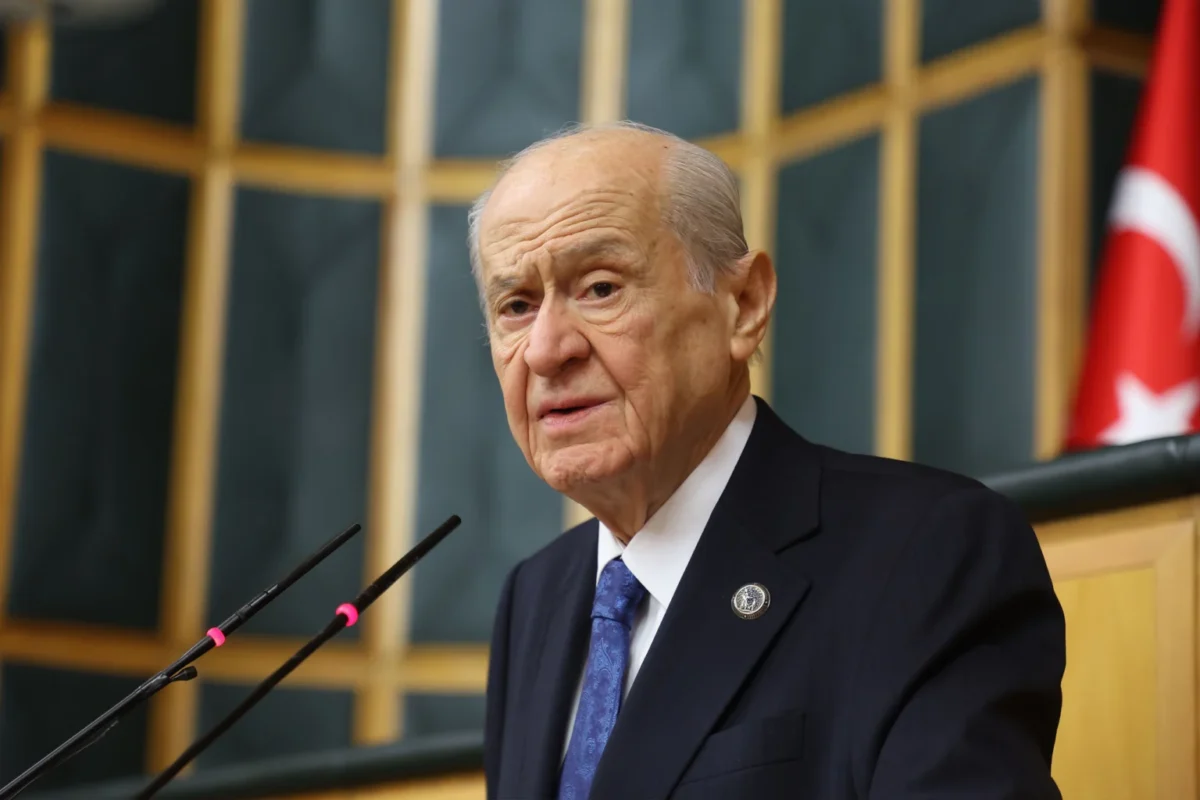
From a game theory perspective, the issue is a strategic interaction in which two actors make interdependent decisions. Each side tries to maximize its own gains while positioning itself according to the other’s moves, and these mutual expectations produce specific equilibrium points. Viewed through the lens of game theory, a positive-sum equilibrium is possible here. The government initiates democratization, advances the peace process, and thereby attracts new capital, while also keeping its coalition partner (MHP) on board through the peace process, a partner that has made alignment with the Russia-China axis a condition for continued support in the next election. When the opposition produces trust through a figure who commands economic credibility, the equation shifts. A convincing economic vision makes the opposition a concrete alternative in the eyes of voters and expands the pool of undecided voters in the opposition’s direction. This expansion becomes a direct electoral threat to the government. The government has two possible responses to this threat. It can escalate repression, or it can play the democratization card to neutralize the opposition’s narrative. But escalating repression drives away long-term capital and compounds the cliodynamic pressure. Democratization, by contrast, allows the government both to attract new capital and to retain the initiative as the reforming actor. The sooner the opposition sets up this equation, the stronger the government’s incentive to move toward democratization becomes, because as the election draws closer, the impulse toward repression tends to override rational calculation.
In such an equilibrium, both sides strengthen their own positions, but the real winner is the country. This is exactly what cliodynamics shows us. Cycles are not destiny. If structural tensions are managed in time and with the right tools, fractures can be softened. But this window of opportunity is not permanent. The global wind is currently blowing in favor of democratization. The loss of ground by authoritarian figures like Trump, Orban, and Netanyahu reinforces this direction. Capital is searching for new and predictable harbors. Society, meanwhile, appears both open to and ready for change.
History does not have to repeat itself. But in societies that spend this opportunity only on daily skirmishes, it usually does. The window of opportunity has not yet closed. Whether it stays open, however, depends on whether the actors can read it correctly. This cycle can be broken only to the extent that both the government and the opposition can accurately diagnose this threshold.

The Equation of History:
A Window of Opportunity for Turkey Originally published as a Turkish-language opinion piece in Medyascope.
Dr. Onurcan Yılmaz is a professor at the Department of Psychology at Kadir Has University. He is the founder and director of the “MINT Lab,” a research group that investigates the cognitive and contextual origins of moral judgments and behavior. His work focuses on understanding the cognitive and contextual antecedents and consequences of human morality.
References
Alper, S. & Yılmaz, O. (2020). Sagciligin ve solculugun psikolojisi (The psychology of the right and left). Nobel Yayincilik.
Alper, S. & Yılmaz, O. (2024). Komplo teorilerine neden inaniriz? (Why do we believe in conspiracy theories?) Dogan Kitap.
Goldstone, J.A. (1991). Revolution and Rebellion in the Early Modern World. UC Press.
Turchin, P. (2010). Political instability may be a contributor in the coming decade. Nature, 463(7281), 608.
Turchin, P. (2012). Dynamics of political instability in the United States, 1780-2010. Journal of Peace Research, 49(4), 577-591.
Turchin, P. & Nefedov, S.A. (2009). Secular Cycles. Princeton University Press.
Turchin, P. & Korotayev, A. (2020). The 2010 structural-demographic forecast for the 2010-2020 decade: A retrospective assessment. PLOS ONE, 15(8), e0237458.
Turchin, P. (2023). End Times. Elites, Counter-Elites, and the Path of Political Disintegration. Penguin Press
The Equation of History: A Window of Opportunity for Turkey: Translated by Dr. Onurcan Yılmaz for Medyascope
The Equation of History: A Window of Opportunity for Turkey
The Equation of History: A Window of Opportunity for Turkey