ISTANBUL (Medyascope) – Medyascope correspondent Emir Berke Yaşar spoke with political scientist Altay Göyüşov on the current state of the Aliyev regime in Azerbaijan.
By Emir Berke Yaşar • Medyascope
In this article
- Medyascope: Who are the oligarchs in Azerbaijan, and how do they acquire their economic power? How do the relationships between major corporations, state tenders, energy revenues, high-ranking bureaucrats, and the Aliyev family function?
- Medyascope: What is the actual weight of institutions such as the parliament, courts, prosecutor’s office, security agencies, and local governments within this system?
- Medyascope: You note that ensuring the regime’s continuity is one of the fundamental elements shaping Azerbaijan’s foreign policy. How is the link established between foreign policy and the domestic authoritarian system?
- Medyascope: Does the prominent nationalist and “brotherhood” rhetoric characterizing relations between Turkey and Azerbaijan prevent the Turkish public from fully perceiving the authoritarian regime in Azerbaijan, the state of the political opposition, and human rights issues?
- Medyascope: What forms the basis of the current regime in Azerbaijan?
The Aliyev has its roots in the country’s Soviet era, when Haydar Aliyev, father of current leader Ilham Aliyev, was appointed to lead the Azerbaijan SSR in 1969.
Many of modern Azerbaijan’s pervasive features– deep-rooted corruption, regionalism, and power of family ties in money and politics– have their roots in this era.
While Haydar Aliyev’s 1993 takeover of the independent Azerbaijani state brought stability to the post-Soviet republic, it also entrenched said features, according to Göyüşov.
While the country is a republic on paper, Göyüşov characterizes the country as a family-run affair. The rise of Ilham Aliyev to power in 2003 following his father’s death, as well as the 2017 appointment of his wife as vice president have cemented the family’s dynastic grip on power.
The family’s dynastic power also extends to business realms, says Göyüşov, who notes that it is virtually impossible to run a successful business in the country without significant ties to the ruling family.
Additionally, the rise in petrol prices during Ilham Aliyev’s tenure have led to soaring revenues and enabled the president to maintain a broader patronage network than was possible during his father’s era.
Wealth in the Caucasian petrostate, however, is not shared equally, says Göyüşov. With most wealth concentrated in and around the Aliyev family, Azerbaijan is home to one of the region’s poorest societies where squalor living conditions abound.
Medyascope: Who are the oligarchs in Azerbaijan, and how do they acquire their economic power? How do the relationships between major corporations, state tenders, energy revenues, high-ranking bureaucrats, and the Aliyev family function?
Göyüşov: In Azerbaijan, it is virtually impossible to conduct significant economic activity or achieve significant economic success outside the control of the ruling family.
For this reason, it is not entirely accurate to speak of an “oligarchic system” in Azerbaijan in the classical sense. This is because actors who might possess vast wealth and economic power independently of the ruling family are not permitted to emerge. When an individual in Azerbaijan begins to achieve major—or even medium-scale—economic success through their own initiative, they can quickly be eliminated by the system or have their operations obstructed.
To protect its economic monopoly, the family often prevents even large, well-known foreign companies from freely entering the Azerbaijani market. The presence of major international corporations in sectors such as banking, retail, automotive, and mobile telecommunications is extremely limited. Even when foreign chains are permitted in the service sector—such as in hotel and restaurant management—they are generally required to operate through a local partner who is close to or connected with the ruling family.
Consequently, political and economic success in Azerbaijan depends largely on the patronage of the ruling family and on clientelist relationships. However, even being part of the system does not guarantee the inviolability of one’s property, as ultimate decision-making authority is concentrated in a single family. Through a political decision, one can lose assets, companies, or economic opportunities and be driven to bankruptcy in a short time. In Azerbaijan, the law is effectively reduced to the will of a single family.
The situation in Azerbaijan differs significantly from the classical oligarch model seen in Russia or Ukraine. In those countries, there is indeed a class of oligarchs that emerged independently of the direct control of political power; these classes were shaped primarily by economic activities and the accumulation of private capital. In Azerbaijan, however, almost all those labeled “oligarchs” are representatives of the political leadership—ministers or other high-ranking state officials. No independent class of businesspeople has emerged that grew wealthy solely through its own economic activities.
The individuals in Azerbaijan referred to as “oligarchs” accumulated wealth after assuming office and transferred a significant portion of it abroad. Russia, Turkey, the US, European countries, and Dubai were among the primary destinations, with the UK being the most significant hub; this was because they knew their wealth could be confiscated should they lose their political positions. Indeed, when a high-ranking official is removed from office, their political and economic clout usually evaporates, and it subsequently comes to light that they had amassed substantial wealth overseas.
In recent years, however, as economic rents and wealth have become more directly centralized around the ruling family, current officials are not afforded the same opportunities to amass vast fortunes as in the past. Nevertheless, state officials still view their positions as a means to acquire wealth and attempt to move their assets abroad.
In the classic oligarchic system, individuals first become wealthy and then seek to exert influence over political power. In Azerbaijan, the reverse is true: people do not come to power because they are wealthy; rather, they come to power in order to become wealthy.
Medyascope: What is the actual weight of institutions such as the parliament, courts, prosecutor’s office, security agencies, and local governments within this system?
Göyüşov: In Azerbaijan, institutions like the parliament, courts, and the prosecutor’s office are not truly independent. While they exist in form, in practice everything depends on the will of the executive branch; the parliament and courts essentially carry out the executive’s directives.
The executive branch, in this constellation, consists of a single individual and the close family circle surrounding him; this structure operates much like a family council. It is impossible to speak of politically significant decisions being made by independent institutions. Decisions are made at the center of the system, and other institutions implement them.
There are no genuinely elected local governments in Azerbaijan either. Regions are governed by local executive heads appointed by the president. Baku is one of the exceptional cases among regional capitals where the executive head—who functions as the mayor—is not elected by the public, not even nominally; the president appoints this person directly.
There are no genuine elections in Azerbaijan, either. The president effectively determines the members of parliament, while elections serve merely as a procedure to formally legitimize their appointment. Real political competition is not permitted.
Although a small number of opposition parties are nominally present in parliament, they do not constitute a genuine opposition; often, they support the president’s policies even more vigorously than the ruling party does. Indeed, it is precisely for this reason that they are allowed to enter parliament under the label of “opposition.”
It is also difficult to speak of a ruling party in the classical sense in Azerbaijan. The New Azerbaijan Party exists in tandem with the regime; should the regime cease to exist, the party would likely disappear as well. For it lacks an independent ideology; its ideology is essentially that of the Aliyevs—and that is all there is to it.
Elections continue to be held because the Constitution of Azerbaijan mandates that state power be established through the electoral process. The ruling power maintains this electoral procedure to lend a veneer of legality to its governance and to preserve the appearance of constitutional legitimacy.
For decades, the Azerbaijani government has employed systematic methods reminiscent of Stalin-era repression to prevent the emergence of political competition within the country. These repressive measures do not target only a specific ideological circle; nationalists, representatives of religious movements, and leftists are equally affected by these policies. The ruling power seeks to neutralize—using state mechanisms of repression—any individuals or groups it perceives as threats, regardless of their ideological affiliation.
However, the ruling power does not rely solely on repression; it also co-opts certain individuals and groups through financial incentives, privileges, and patronage networks. Over the past two decades, Azerbaijan’s authoritarian system has consolidated its power by combining repression with co-optation, while the opposition has been significantly weakened.
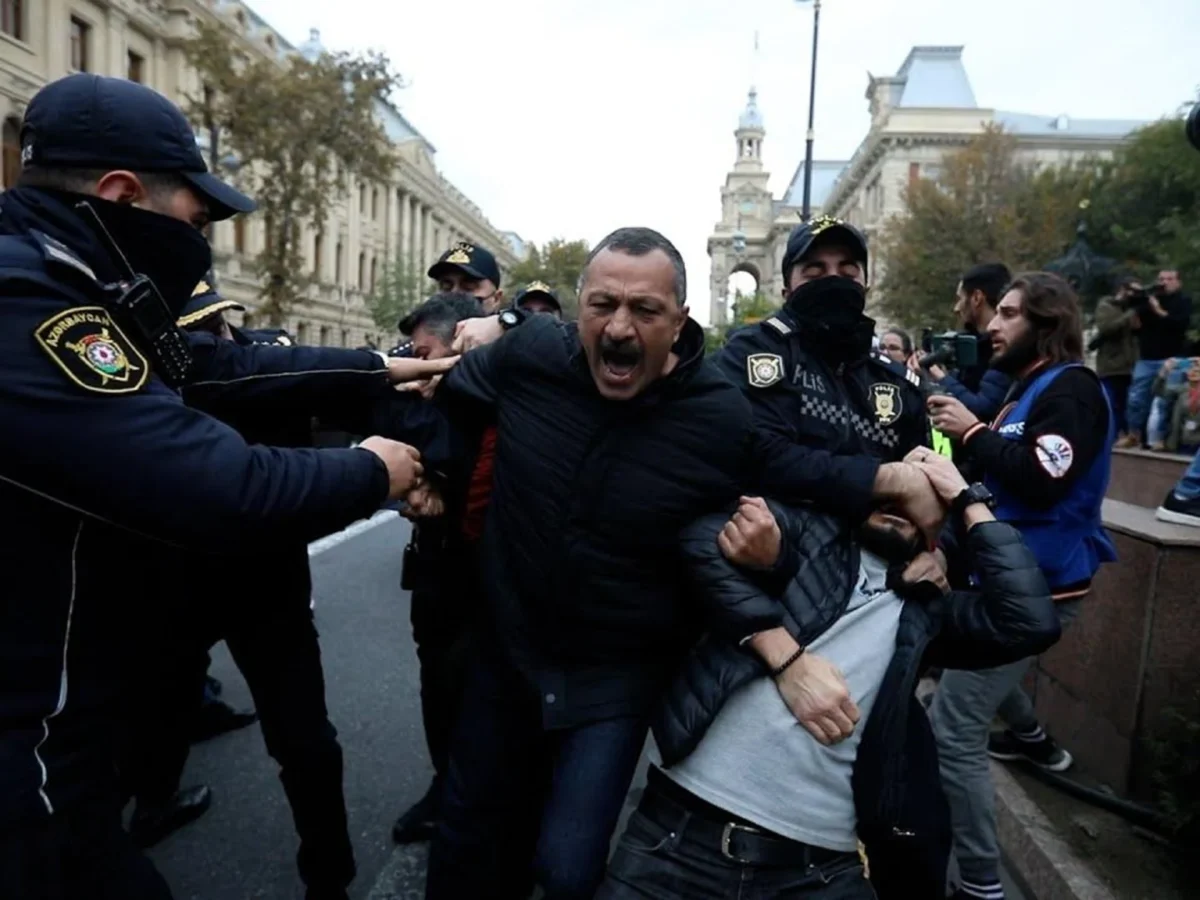
Genuine opposition within the ruling establishment is strictly prohibited. Nevertheless, a genuine opposition continues to exist, albeit under severe repression. This opposition encompasses nationalist groups, religious-political movements, and representatives of relatively new, influential, and progressive political movements. The Azerbaijani Popular Front Party is one such group; however, many of its members, including its chairman, are currently imprisoned. While repression has severely weakened the genuine political opposition, the ruling power has not yet succeeded in completely eliminating it, as has occurred in Turkmenistan. One of the primary reasons the opposition has not been completely eliminated is that a significant segment of society is dissatisfied with the ruling power due to social and economic issues. However, people cannot openly express this discontent amidst an environment of intense pressure, and individuals or groups who do raise their voices face harsh state repression.
At first glance, the system may appear extremely strong and robust. Yet, historical experience demonstrates that the power of such regimes can be largely illusory. The fundamental reason they risk rapid disintegration in the face of an unexpected political shock is that the ruling power has prevented the formation of genuine, independent state institutions.
In Azerbaijan, there is effectively only one political institution: the Aliyev regime. The parliament, the courts, and similar structures do not function as independent and legitimate political institutions. History also shows how weak and dysfunctional security and power structures can prove to be during the collapse of such regimes. We witnessed this during the dissolution of the Soviet Union and the recent unraveling of similar authoritarian systems.
This situation poses a serious risk for Azerbaijan. The collapse of the current power structure, amidst the absence of strong, legitimate state institutions could lead to a governance vacuum and chaos in the country.
Medyascope: You note that ensuring the regime’s continuity is one of the fundamental elements shaping Azerbaijan’s foreign policy. How is the link established between foreign policy and the domestic authoritarian system?
Göyüşov: The mindset of “appease outsiders while exploiting those at home” is a formula the Aliyevs developed during the Soviet era. Back then, Heydar Aliyev was one of those regional leaders who prioritized Moscow’s interests above all else, managing relations with the center through various mechanisms of patronage and bribery. Despite its economic resources, Azerbaijan lagged significantly behind neighbors like Georgia and Armenia in terms of the population’s living standards during that period.
This same mindset persisted after the collapse of the Soviet Union. The Azerbaijani administration strives to accommodate the interests of major powers and international actors as much as possible, spending vast resources to build networks of influence and lobbying—ranging from the Vatican to circles within the Council of Europe. The goal is to ensure the administration is perceived internationally as a normal, acceptable government, and to leverage this externally gained legitimacy to maintain domestic repression of the populace.
The Azerbaijani government caters to the interests of external actors so effectively that many countries and international entities largely turn a blind eye to the situation in the country. For instance, while Belarus—and in recent years, Georgia—have faced sanctions and severe political pressure for straying from democratic standards, the Aliyev administration receives much more lenient treatment from the West.
Medyascope: Does the prominent nationalist and “brotherhood” rhetoric characterizing relations between Turkey and Azerbaijan prevent the Turkish public from fully perceiving the authoritarian regime in Azerbaijan, the state of the political opposition, and human rights issues?
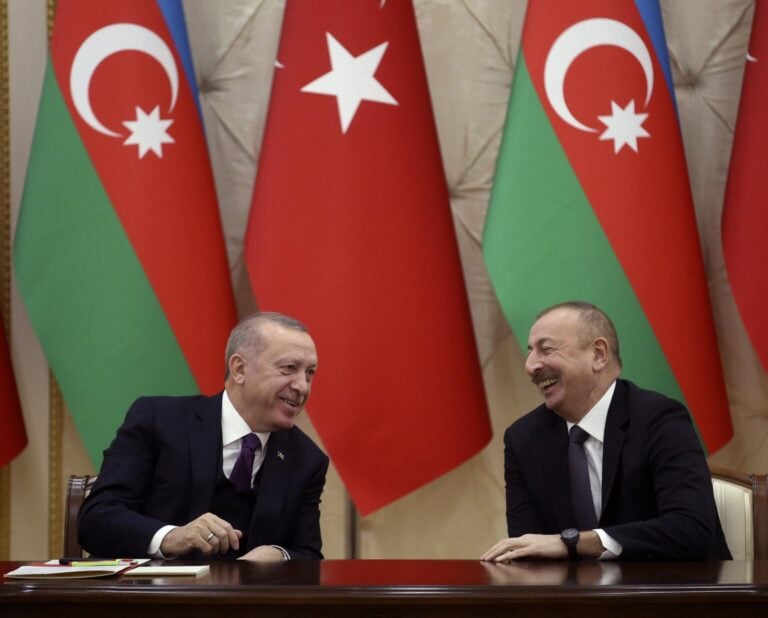
Göyüşov: It certainly does. In the approach taken by successive Turkish governments and main opposition parties toward Azerbaijan, the issue of democracy not only takes a back seat, but steps are sometimes even taken that work to the detriment of democratic forces. For instance, unlike the US and EU member states, Turkey occasionally extradites Azerbaijani dissidents who have sought refuge in the country back to Azerbaijan. Even nationalist dissidents who constantly profess their deep devotion to Turkey are not exempt from this.
The leader of Turkey’s main opposition party states that he supports the restoration of Azerbaijan’s restricted representation rights at the Council of Europe. Yet, the reasons why those rights were restricted in the first place are hardly ever raised. Issues such as the mass imprisonment of the democratic opposition in Azerbaijan, the presence of hundreds of political prisoners, and the systematic erosion of human rights and fundamental freedoms are overlooked.
When the Soviet Union collapsed, the sympathy we felt for Turkey stemmed from more than just ethnic and cultural affinity; we also viewed Turkey as a NATO member, a democratic nation, and a model that could serve as an example for us. Unfortunately, over time, we have seen that democracy is not a primary factor in Turkey’s policy toward Azerbaijan.
There are various objective and subjective reasons for this. One such reason is that, although politicians in Turkey frequently invoke the concept of democracy, they have not fully internalized democratic values, and the country lacks a truly established, institutionalized democratic order. It would be far more difficult for a country that has truly internalized democratic values and possesses strong democratic institutions to completely turn a blind eye to the systematic suppression of democracy in another country.
Medyascope: What forms the basis of the current regime in Azerbaijan?
Göyüşov: The fundamental operational logic of the Azerbaijani leadership can be explained through two main elements: the domestic elimination of human rights and freedoms through constant repression, and the external purchase of political support and legitimacy—primarily using oil revenues. These are the two principal weapons of the Aliyev administration. The security bureaucracy, economic patronage networks, balances of interest among the elites, and other institutions serve to support these two fundamental mechanisms. Consequently, the true core of the system is not merely the family, the security apparatus, or the patronage network. Rather, the core is an integrated power mechanism—centered on the Aliyev family—that operates through domestic repression and the generation of influence abroad based on energy revenues.
The Azerbaijani regime: a family affair by Emir Berke Yaşar | Translated by Leo Kendrick | Edited by Medyascope English Newsroom