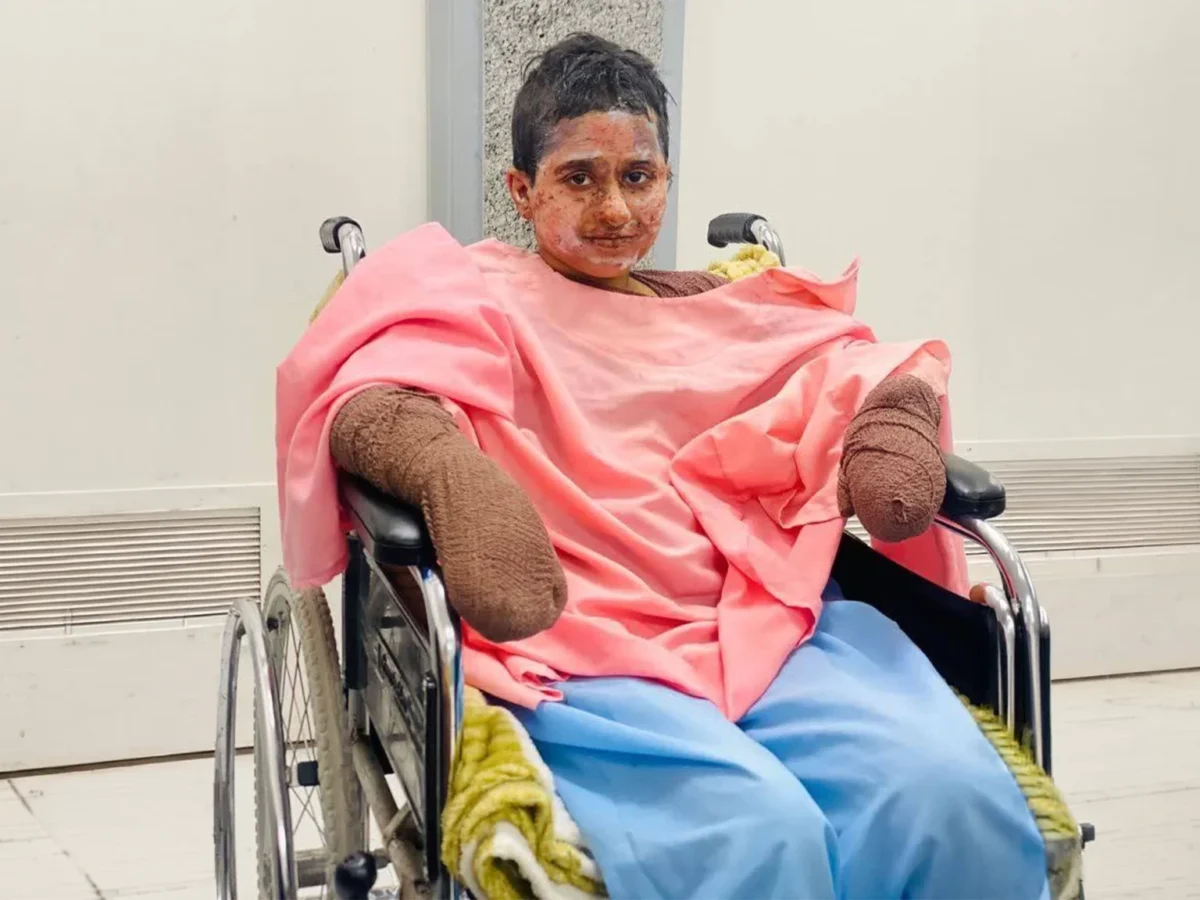
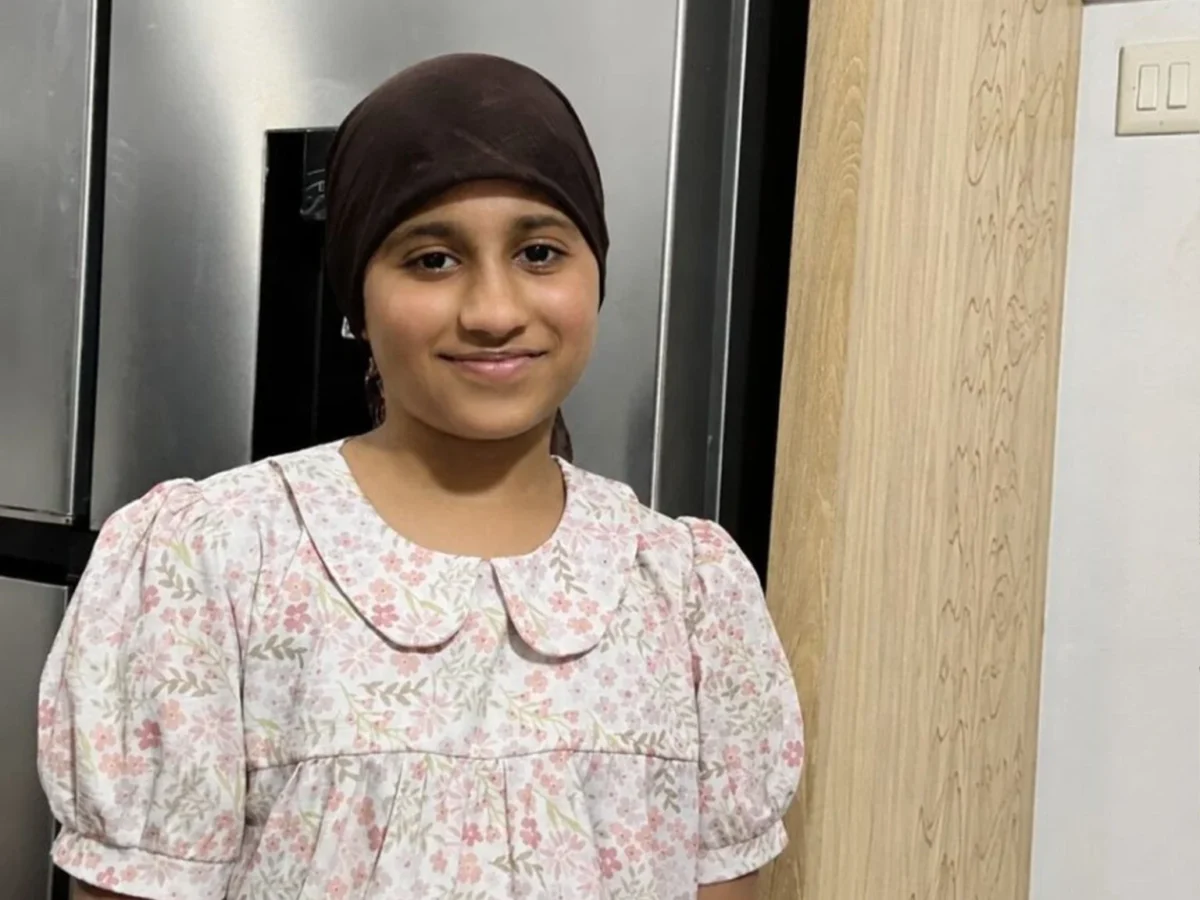
TEHRAN (Medyascope) – Hoda Soltani, 13, survived the massacre at a girls’ school struck by U.S. missiles on February 28, 2026. Hoda lost both her younger brother and her cousin in the attack. Speaking to Medyascope she recounted the day of the strike and its aftermath, she told Medyascope, “The war must end now, but I want Trump to die.” Hoda Soltani spoke with Goltane Ghazi.
In this article
By Goltane Ghazi • Medyascope
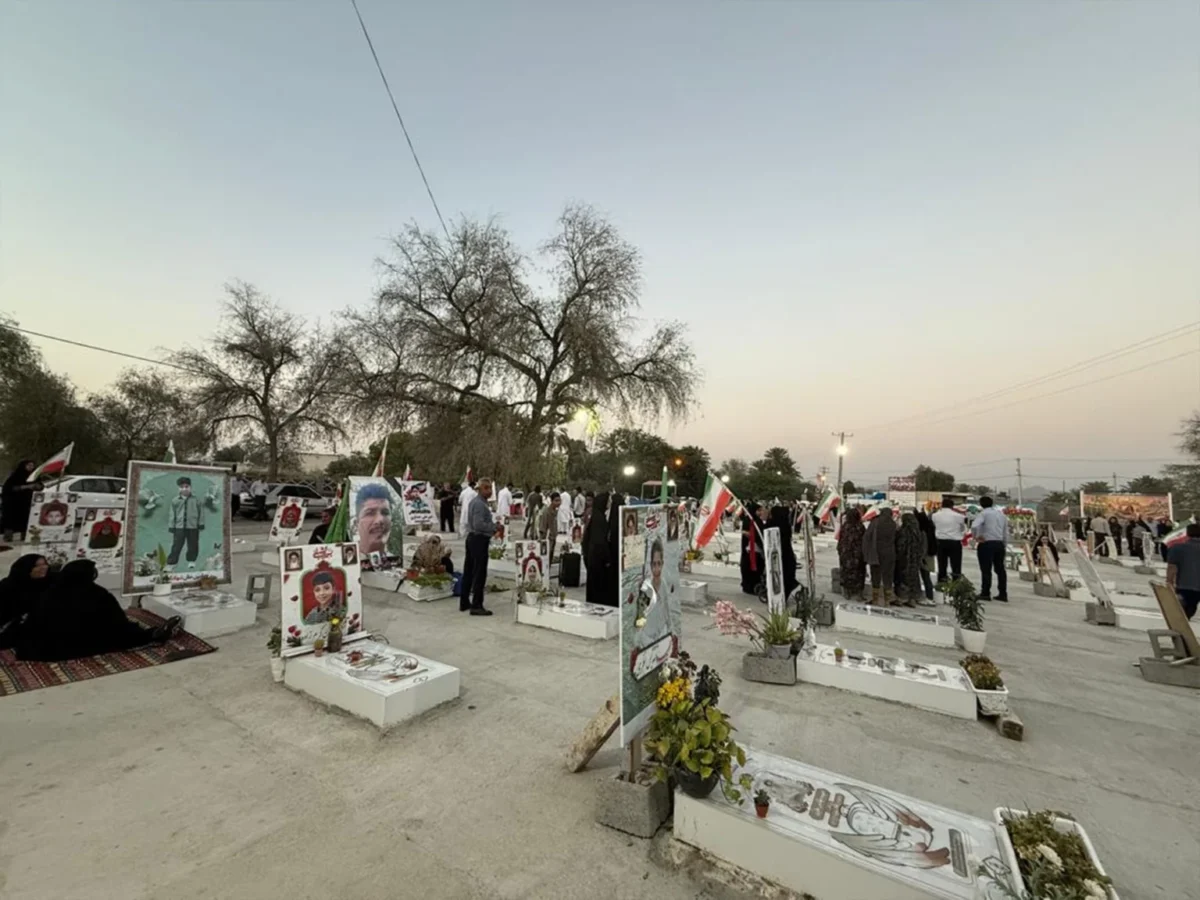
At least 168 people, nearly all of them children, were killed in an attack on a girls’ primary school in the southern Iranian city of Minab. The incident was noted as the deadliest civilian massacre of the U.S.-Israeli war against Iran. Classes were in session when Shajareh Tayyebeh Girls’ Primary School was reportedly struck by a Tomahawk missile. The thirteen-year-old fifth-grade student is the sole survivor of her class. Hoda and her family spoke to Medyascope recounting their experiences.
‘I thought I was dying’
When the first missiles hit Tehran on February 28, 2026, authorities ordered the closure of all schools in Minab, a city roughly 1,400 kilometers from the capital. As students were being sent home, Hoda remembers the moments leading up to the attack:
“At around 11:00 a.m., the vice principal came into our classroom. She said the principal had an urgent meeting and that the school was being let out. She told us that we could either go home or wait for our parents to be called to pick us up. My younger brother and my 9-year-old cousin were in third grade. Their classroom was on the floor below ours. They were my best friends. Every day I took them to school and brought them home. I went to their classroom and called them out. Then we walked into the schoolyard together. When we got there, I realized that I had left my backpack in the classroom. I had rushed out and forgotten it. I told my brother Ahmad and my cousin Mohammad to wait for me for a minute. I went back to get my bag.”
Only seconds after Hoda re-entered the building, the attack occurred.
This is how she describes it:
“I went back inside the school. I was climbing the stairs and had not yet reached my classroom when I heard a very loud whistling sound. A few seconds later, there was an explosion. It was a terrifying blast. The entire building shook violently. I fell onto the stairs. Parts of the walls and the upper staircase collapsed on top of me. There was smoke and fire everywhere. A large piece of debris was pressing against my chest. I could barely breathe. Everything looked black. I could feel my legs burning. Later I learned that my shoes had burned and melted onto my feet. Someone tried to remove them, but by then my feet had already been severely burned. With great effort, I managed to pull my right hand out from under the rubble. I hoped someone passing by would see me and rescue me. Gradually, my vision faded to black. I thought I was dying. But I was not afraid. I felt nothing.”
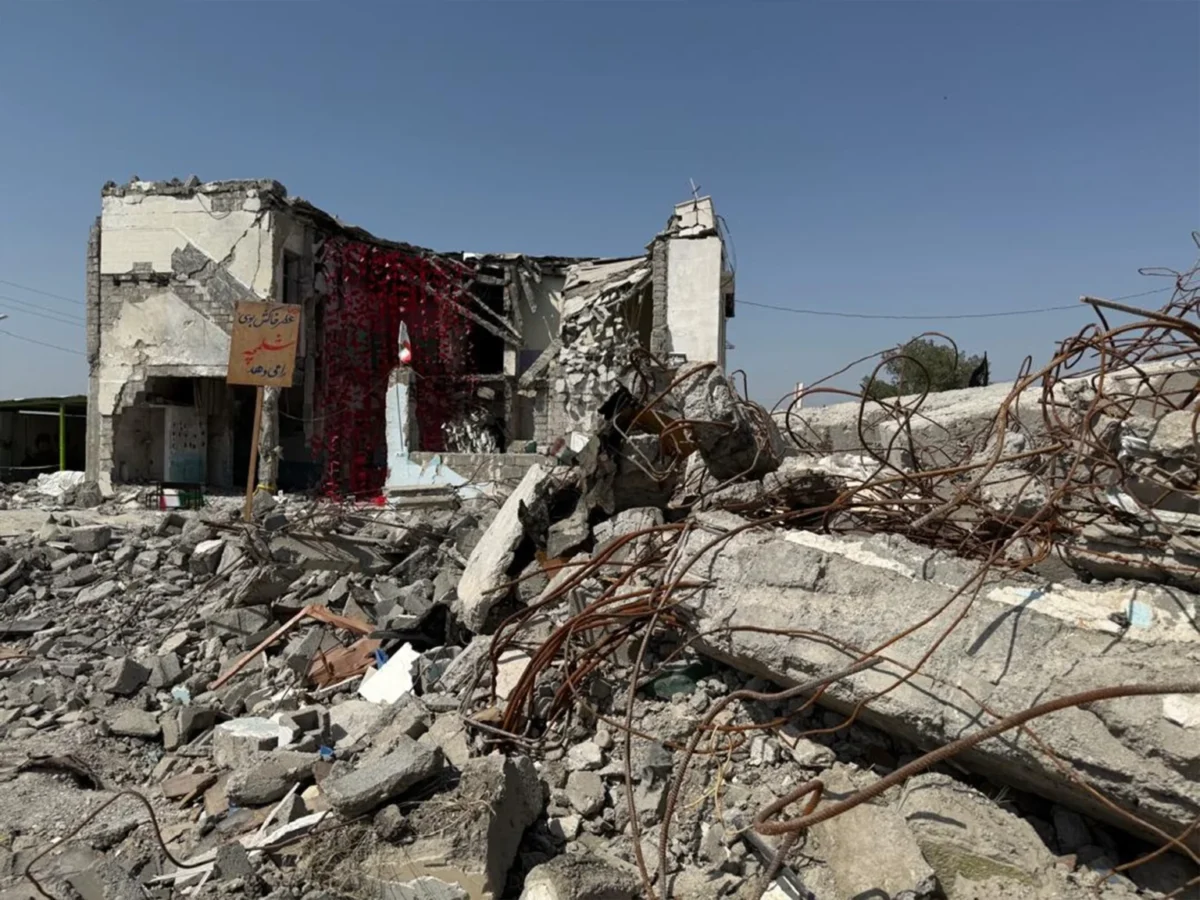
An investigation by The New York Times documented that the school was struck by Tomahawk missiles fired by the U.S. military. The Trump administration has still not officially accepted responsibility for the attack. US claims that members of the Islamic Revolutionary Guard Corps were present in the area, but the military base located near the school had reportedly been closed years earlier.
Hoda’s mother, Homa Shahdoosti, offered her own account of the attack and its aftermath,
“I was at home that morning. I was watching reports on television about the attack on Tehran. I never imagined that Minab could become a target. I certainly never thought that the United States would strike a school full of students. We are ordinary, poor people. We have no role in any power struggles.
At around 11:30 a.m., while I was talking with neighbors, we heard three terrifying explosions coming from the direction of Minab. Everything shook. We were all shocked. At first, people said the explosion had happened near a local health clinic. We all ran in that direction. But as we got closer, we realized the smoke was rising from the school.
It felt as though the world had collapsed on my head. Two of my children were at that school, along with my sister’s child. I do not remember how I got there. When I was about a hundred meters away, I saw children’s hands, feet, fingers, and pieces of flesh scattered everywhere. The air was filled with the smell of blood and burning. The area was covered with the dismembered bodies of children.
My sister and I began searching for our children among the bodies. We had to lift and examine mutilated remains one by one, hoping to find some sign of our own children.”
The longest day of a mother’s life
As Homa continued searching for her children amid the chaos, smoke, and screams, a rescue worker approached her carrying her daughter’s schoolbag. Torn between hope and terror, she shouted, “That is my daughter’s bag! Where is she?”
The rescue worker replied, “Maybe she’s at the hospital.”
Homa immediately rushed to the hospital where she searched the emergency department, the intensive care unit, and every room she could find, but her children were nowhere to be seen. She then went to the morgue, where she examined the shattered bodies of young children one by one.
She still could not find her children.
Homa received the news hours later that her son Ahmad’s body had been found:
“At around 5:00 p.m., my sister and her husband went to another morgue next to the cemetery. They found my son Ahmad’s lifeless body there. But they didn’t tell me. Instead, they called my husband. I saw him lean against a wall and begin crying loudly. He kept shouting, ‘Ahmad! Ahmad!’”
For Homa, the longest day of her life finally came to an end close to midnight. Hoda had been found:
“At 11:00 p.m., Hoda regained consciousness in intensive care. She told the medical staff, ‘My name is Hoda. I am a fifth-grade student.’ After she identified herself, her name was entered into the hospital’s system. When I saw her name, I screamed with joy. Hoda’s face, head, arms, and legs had been burned. She also had fractures in her chest. When I was finally allowed to see her that night, she smiled when she saw me.”
Hoda underwent several surgeries, including the reattachment of her severed ring finger. Although her burns continue to heal, the scars remain a constant reminder of that day. The 13-year-old often cries and wakes up screaming during the night.
Today, Hoda says she misses her brother and is filled with anger.
“I miss my brother more than anyone. I always played with Ahmad. I loved him so much. I want Trump to die because he killed my brother. I miss my friends too. After the attack, I was left very alone. I was injured and burned. At night, my skin still itches and I cry. I never want to go back to school. I hate school now. I hate war. I hate America and Israel. But I want the war to end as soon as possible so that no one else dies. Being trapped under the rubble, hearing the explosion, and feeling my body burn was incredibly painful. Our school was an ordinary school. There was no military base there. America killed children.”
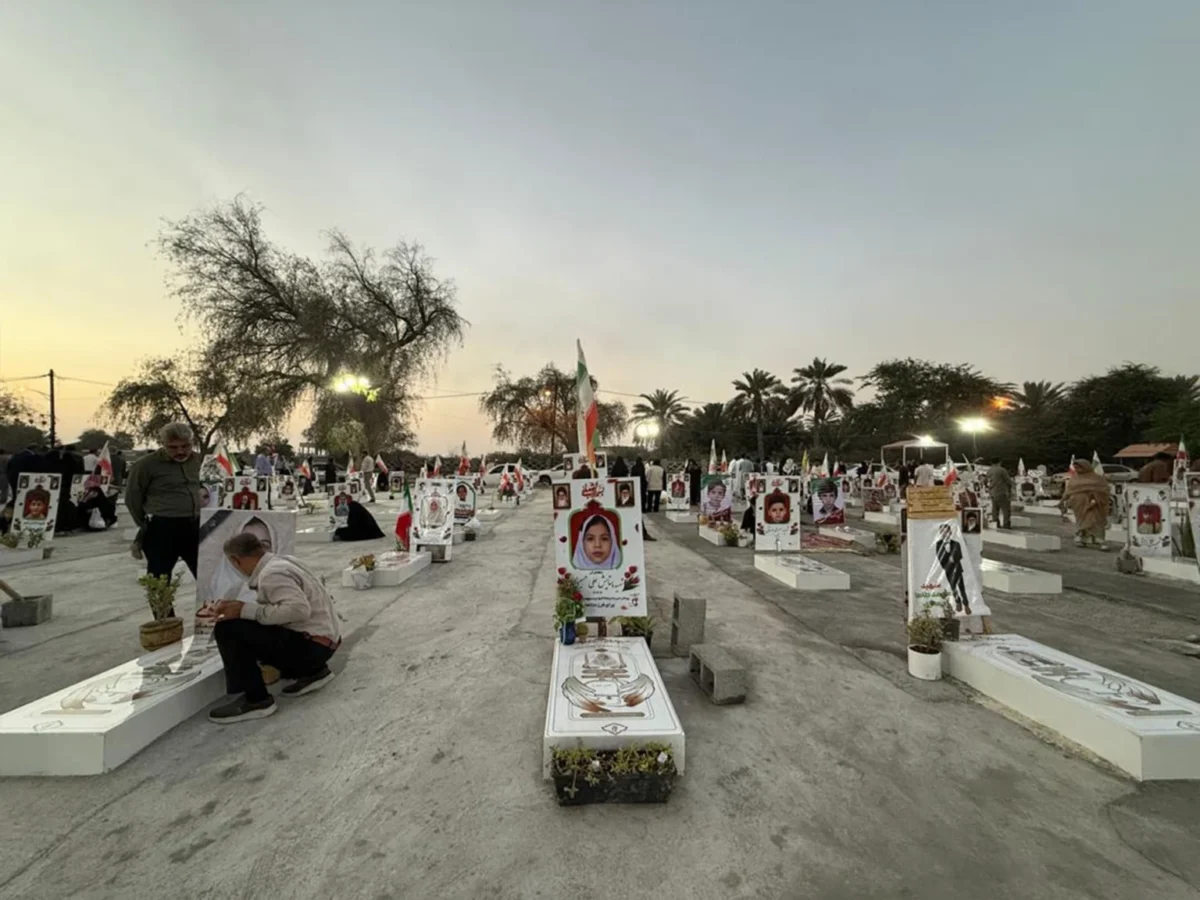
Homa said she shares her daughter’s feelings and called for those responsible to be held accountable:
“There can be no justification for targeting a school, even if it is located near a military facility. Those responsible for this attack must be punished. The curse of the killing and mutilation of 156 innocent students will remain on Trump and Netanyahu forever. But we support peace. Innocent people should not die. We have lived on these lands, on the shores of the Persian Gulf, for centuries. This is our home, and it was the home of our ancestors as well. America must explain why it came from thousands of miles away to bomb a school and kill children.”
“I want Trump to die”: 13-year-old Iran school attack survivor by Goltane Ghazi, edited by Medyascope English Newsroom