The head of the İsmailağa religious sect convicted of marrying off his 6 year old daughter to a then 29-year-old man has been released under judicial control.
In this article
On 17 June 2026, Yusuf Ziya Gümüşel was released from prison under judicial control – measures banning travel and requiring periodic sign in at a local police station. According to reporting by the conservative Yeni Şafak newspaper, Turkey’s Supreme Court of Appeals (Yargıtay) overturned Gümüşel’s conviction, citing procedural deficiencies in the lower court’s handling of the case. The high court ruled that official registries regarding victims age had been insufficiently scrutinised, evidence had been overlooked, and key defence witnesses had not been heard.
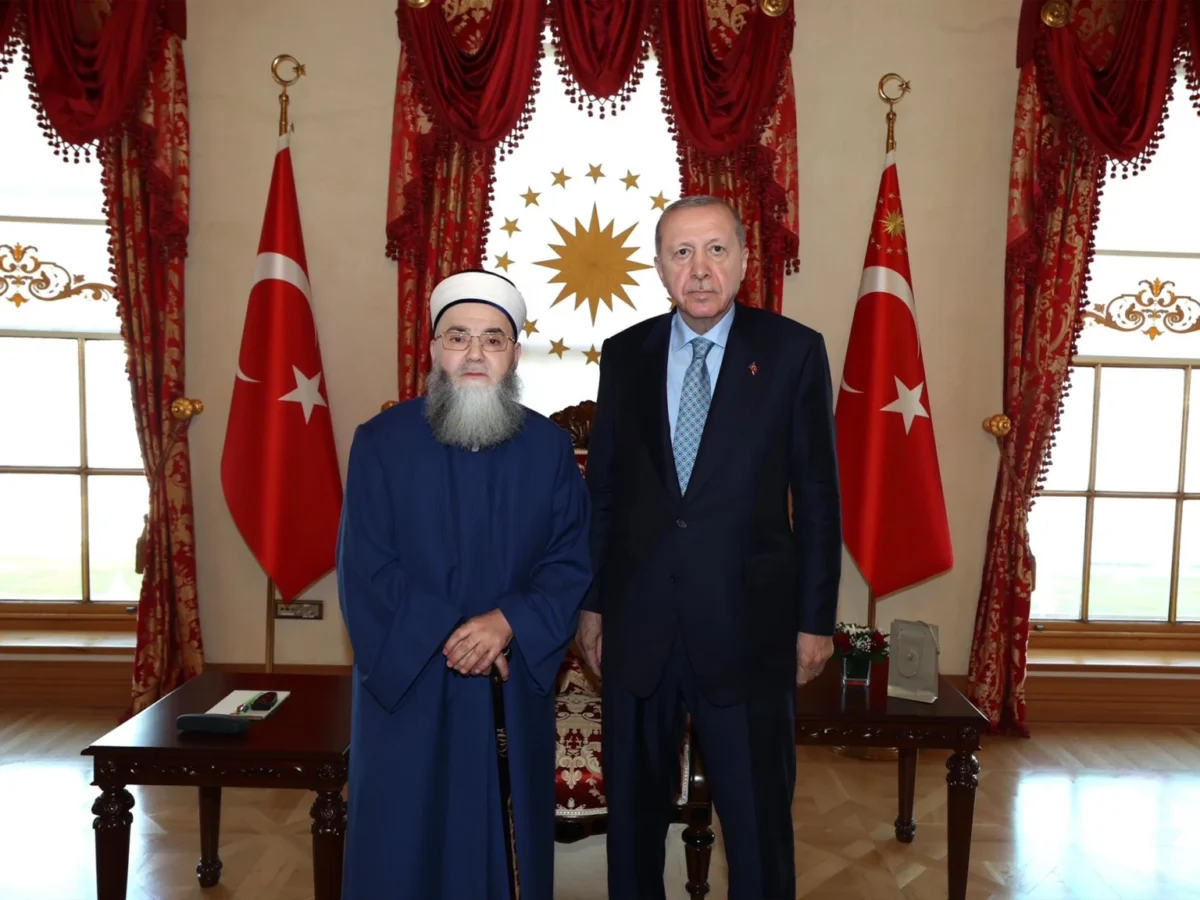
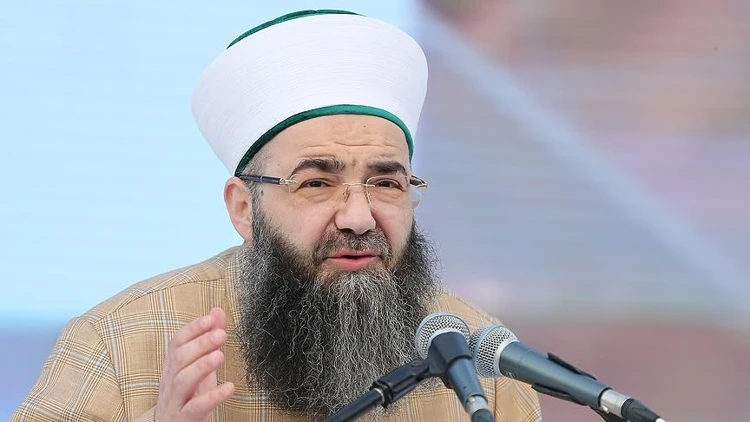
The decision was swiftly celebrated by prominent Islamist figures. Ahmet Mahmut Ünlü, a highly influential cleric popularly known as “Cübbeli Ahmet Hoca,” expressed his profound joy on social media, offering public thanks to the authorities and the Yeni Şafak media group for their efforts in securing the religious leader’s release.
Journalist Timur Soykan subsequently noted that Mr Ünlü had recently held a private meeting with President Recep Tayyip Erdoğan. Prior to the high court’s intervention, Yeni Şafak had run a front-page headline on 12 June accusing the appellate courts of persisting in “lawlessness” and characterizing the continued detention of the elderly sect leader as a grave “injustice.”

Married to a 29-year-old man
The complainant, identified by her initials H.K.G., is the daughter of Yusuf Ziya Gümüşel, the influential founder of the Hiranur Foundation—an organisation affiliated with Turkey’s politically influential İsmailağa Islamic sect. In a formal complaint that ignited widespread public outrage, H.K.G. alleged that her father forced her into an unofficial religious marriage (imam nikahı) when she was just six years old, subjecting her to systematic, daily sexual abuse throughout her childhood.
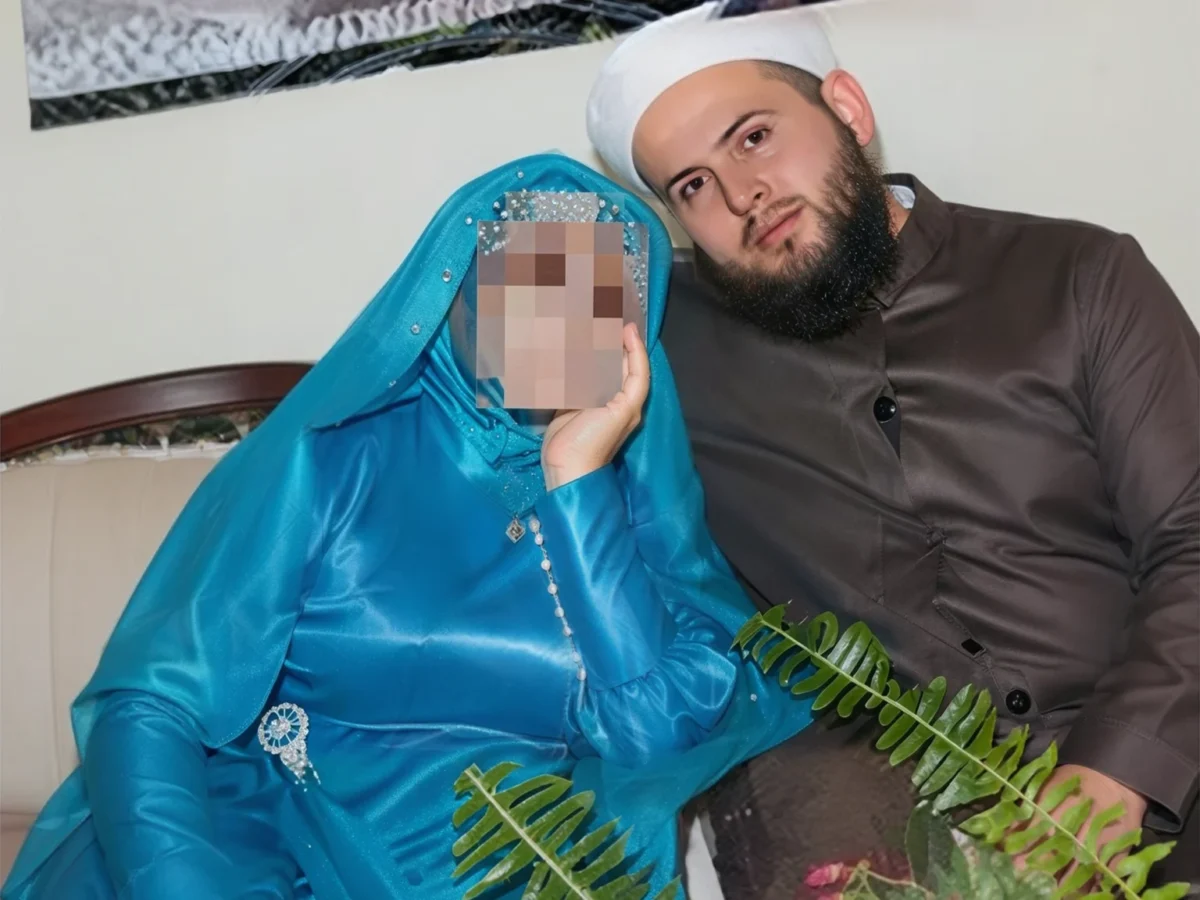
According to her testimony, H.K.G. was wedded to a 29-year-old disciple of the sect, with the ongoing abuse initially presented to her as a “game”. The indictment notes that as a six-year-old child, she was dressed in a white garment resembling a wedding gown, presented to the man, Kadir İstekli, and told: “He is now your husband.” İstekli then took her to a commercial photography studio.
Reflecting on the immediate aftermath of the ceremony years later, H.K.G. testified that İstekli began abusing her almost immediately, framing the acts as ordinary marital behaviour and warning her that it was a secret never to be shared. She further recalled that her parents openly referred to İstekli as their “son-in-law”.
H.K.G. recounted her traumatic story years later:
“Kadir began touching my body. He would rub up against my feet and ejaculate. I cried. Kadir said we were married. He told me just like how my mother and father were married. ‘You are my wife and I am your husband’ he said. Married couples play games such as these but they tell no one. See, your parents don’t tell anyone either. My parents called Kadir ‘The Groom’”
The prosecution’s case outlines how the abuse followed her across jurisdictions. A year after the ceremony, H.K.G. travelled with her parents and İstekli to the family’s hometown of Sapanca, in Sakarya province, where she was sexually assaulted on the upper floor of the family home. The abuse persisted upon their return to the Çengelköy district of Istanbul. The indictment alleges that while her mother initially voiced objections, her father actively facilitated the abuse, surrendering the child to İstekli’s apartment across the hall when the mother was away. Eventually, her mother complied, regularly combing the girl’s hair before sending her to İstekli.
A formal wedding at 14
According to Mr Soykan’s reporting, the family relocated to Istanbul’s Sancaktepe district in 2011, where her father was establishing a sprawling religious complex. The girl was formally betrothed at 13, and a lavish wedding ceremony was staged when she turned 14, after which she was made to cohabit with İstekli.
Four months later, on 17 August 2012, her mother, Fatma Gümüşel, took her to a hospital due to menstrual irregularities. The examining physician immediately identified signs of chronic child abuse and alerted the police. However, despite the launch of a prosecutorial inquiry, the investigation was successfully covered up.
The indictment reveals that H.K.G.’s awakening to her situation began when she chanced upon a radio broadcast discussing the illegality of child marriage. Though her subsequent attempt to flee the family home was thwarted by her father, she recalled the profound isolation that followed:
“After this incident, I withdrew again. I tried to be obedient and followed my family’s wishes. I became pregnant at 17. I found some peace after my child was born, but they took my child away from me. I only realized that being married off at the age of six was not normal, after I searched it on the internet,”
A civil marriage was officially registered when H.K.G. turned 18. During a routine visit to a female gynecologist in Istanbul’s Pendik district, the doctor spoke candidly, informing her that she had been subjected to continuous sexual abuse since early childhood. Galvanised by the encounter, H.K.G. secretly accessed social media, connecting with a woman who urged her to seek legal recourse and advised her to surreptitiously record her conversations with İstekli.
Evidence from secret audio recordings
In the covert audio recordings later presented to prosecutors, H.K.G. confronted İstekli with the medical findings from her gynecologist. İstekli dismissed the doctor’s conclusions as nonsense, suggesting that medical professionals operating outside their strict religious circle were inherently hostile to their way of life.
When H.K.G. expressed deep regret over her childhood and wished her father had protected her, İstekli conceded that the arrangement had been a “complete mistake” born of ignorance. He remarked that while he might still conceptually marry off a six-year-old daughter, he would not permit physical relations under such circumstances today. Throughout the recorded exchange, H.K.G. detailed how she had been treated as an adult bride from infancy, pointing to how her mother groomed her before sending her to his room. İstekli maintained that he had been entirely unaware of her psychological distress until she spoke out.
Armed with these recordings and corroborating photographic evidence, H.K.G. approached the Istanbul Anatolian Chief Public Prosecutor’s Office on 30 November 2020, her body bearing visible bruising, to file a formal criminal complaint.
In their defence, Kadir İstekli and the complainant’s parents, Yusuf Ziya and Fatma Gümüşel, steadfastly denied the allegations of child marriage and abuse, maintaining that H.K.G. was betrothed at 16 and married at 17. Confronted with the audio evidence, İstekli claimed he had merely humoured her claims during the conversation to de-escalate a domestic dispute. He further asserted that the bruising noted during her 2020 complaint was the result of an accidental fall.
However, Mr Soykan’s investigation revealed that when prosecutors subpoenaed official birth registries from Sapanca, records confirmed H.K.G. was born in 1998 at a private hospital in Istanbul, fully validating her timeline. This meant she was indeed only 14 during the initial 2012 medical intervention. Investigators discovered that the original inquiry had been derailed after her mother misrepresented her age and a fraud was committed during a mandatory bone-density test, where an adult woman was substituted in H.K.G.’s place to generate a medical report stating she was 21. A separate criminal investigation was launched into the medical forgery.
The trial and initial convictions
Despite the gravity of the evidence, the case languished for two years without an indictment or arrests. It was not until 30 October 2022 that the Prosecutor’s Office finalised the indictment, explicitly accusing the parents of tolerating and facilitating the abuse.
The state charged Kadir İstekli, the sect leader Yusuf Ziya Gümüşel, and the mother Fatma Gümüşel with aggravated and continuous child sexual abuse, seeking sentences of at least 27 years for each. Additional charges of sexual assault were leveled against İstekli.
On 23 October 2023, the court delivered its first verdict. Kadir İstekli was sentenced to 36 years in prison for child sexual abuse and consecutive sexual assault. Yusuf Ziya Gümüşel received an 18-year, nine-month sentence for aiding and abetting the abuse and gross neglect of parental duties. An arrest warrant remained active for the mother, Fatma Gümüşel, who fled before the trial and remains at large.
The 20th Criminal Chamber of the Istanbul Regional Court of Appeals subsequently vacated the sentence on procedural grounds, returning the case to the local court. The appellate bench ruled that İstekli should have received distinct, separate sentences for abuse committed during her minority (2004–2013) and for qualified sexual assault against a spouse for actions in 2020. The bench also instructed the lower court to increase the parents’ sentences due to the aggravated nature of their parental status.
Following the retrial, the local court handed down its revised verdict on 23 September 2024, upholding the 36-year term for İstekli and the 18-year, nine-month sentence for Gümüşel under the restructured charges.
Turkey: Religious sect leader released in child abuse case was translated and edited by Medyascope English Newsroom